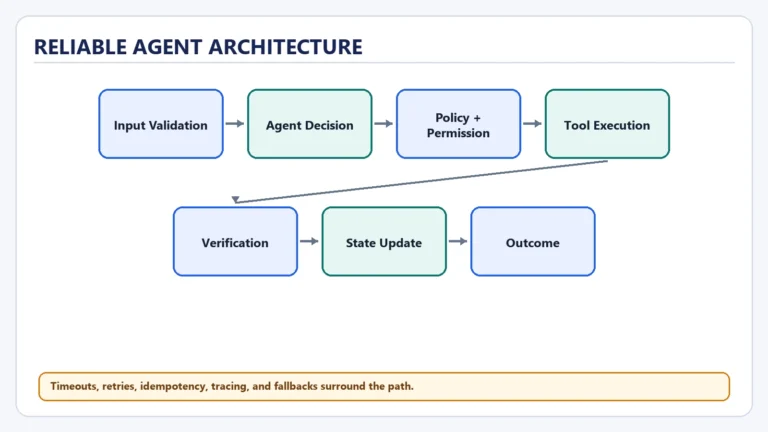
Reliable AI Agent Architecture
A practical, production-oriented explanation of reliable AI agent architecture, with examples, boundaries, trade-offs, and failure handling patterns.
Everything required to move AI agents from prototypes into secure, observable, reliable, scalable production systems.
31 published articles
A practical, production-oriented explanation of reliable AI agent architecture, with examples, boundaries, trade-offs, and failure handling patterns.
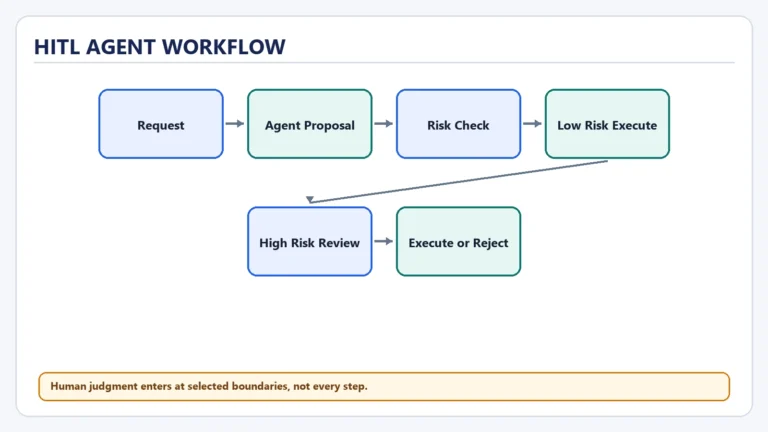
A practical, production-oriented explanation of human-in-the-loop control, with examples, boundaries, trade-offs, and failure handling patterns.
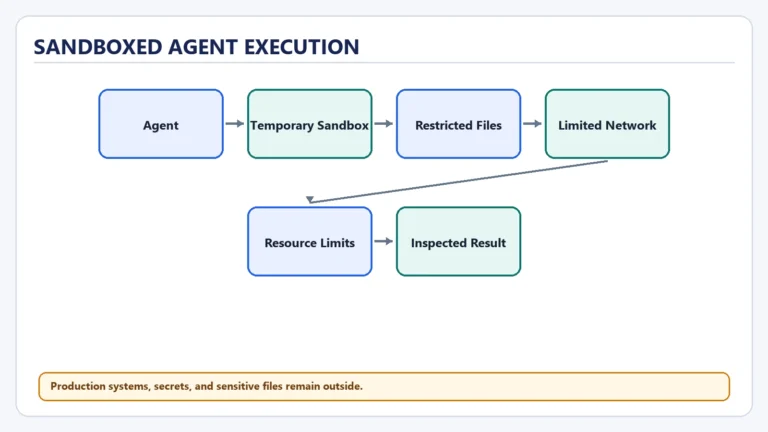
A practical, production-oriented explanation of sandboxed agent execution, with examples, boundaries, trade-offs, and failure handling patterns.
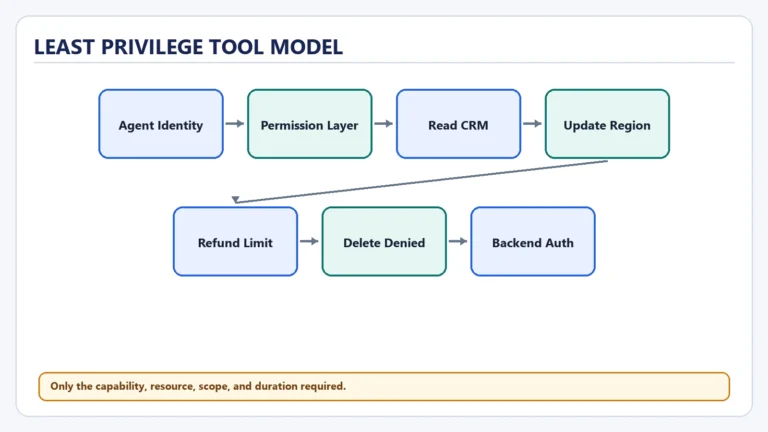
A practical, production-oriented explanation of least-privilege tool permissions, with examples, boundaries, trade-offs, and failure handling patterns.
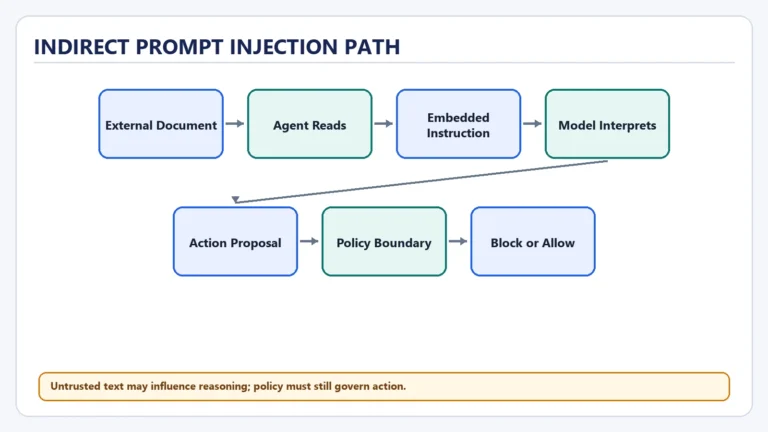
A practical, production-oriented explanation of prompt injection in tool-using agents, with examples, boundaries, trade-offs, and failure handling patterns.
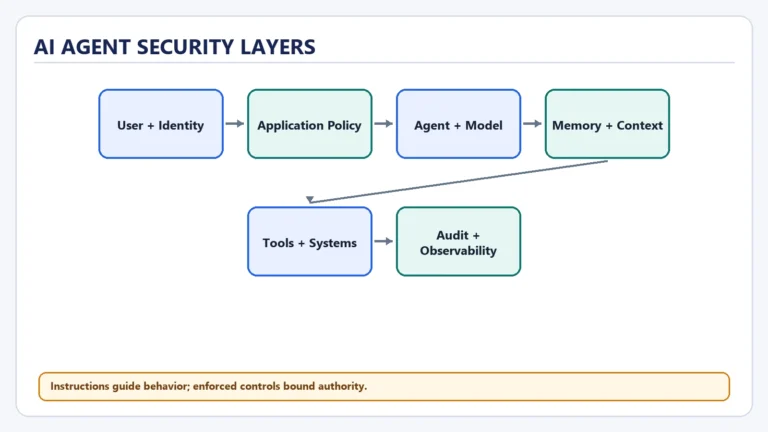
A practical, production-oriented explanation of the security model of an AI agent, with examples, boundaries, trade-offs, and failure handling patterns.
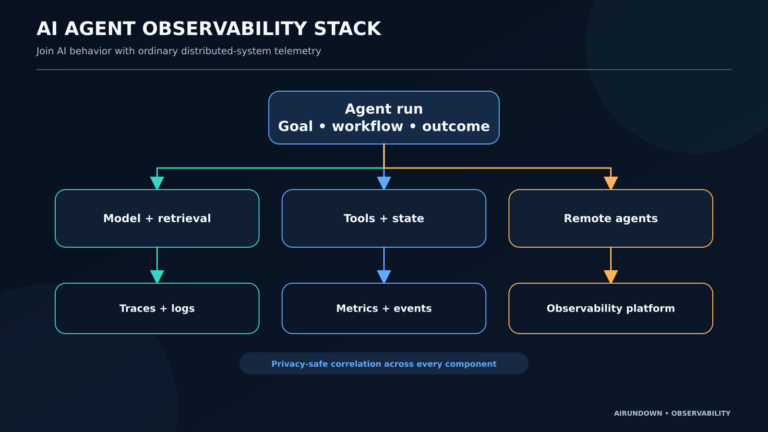
A production observability model for agent, model, retrieval, tool, sub-agent, and infrastructure signals—with privacy and redaction controls.
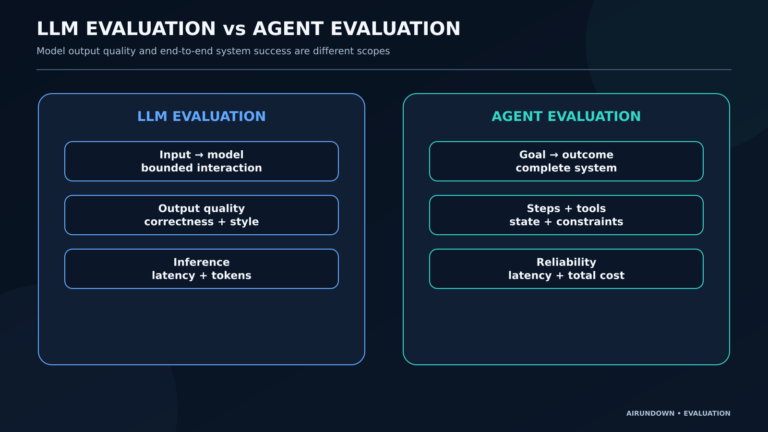
LLM evaluation scores model outputs; agent evaluation measures the whole goal-directed system, including tools, state, constraints, reliability, latency, and cost.
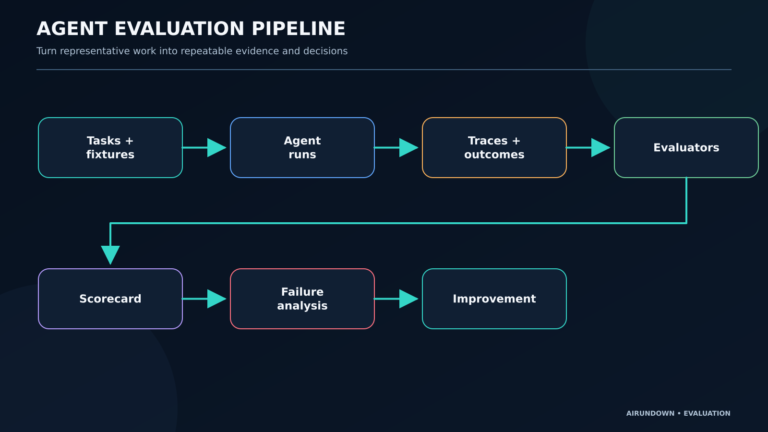
A practical workflow for defining agent success, building evaluation datasets, capturing traces, scoring behavior, analyzing failures, and preventing regressions.
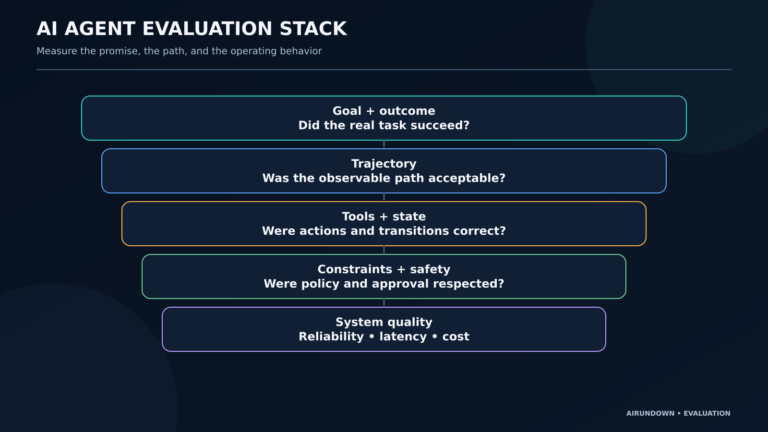
Agent evaluation measures task outcomes, trajectories, tool behavior, constraints, safety, reliability, latency, and cost—not only final prose.