Latest Intelligence
AI Agent Intelligence
Practical guidance for understanding, building, architecting, and operating AI agent systems—from foundational concepts to production reliability.
-
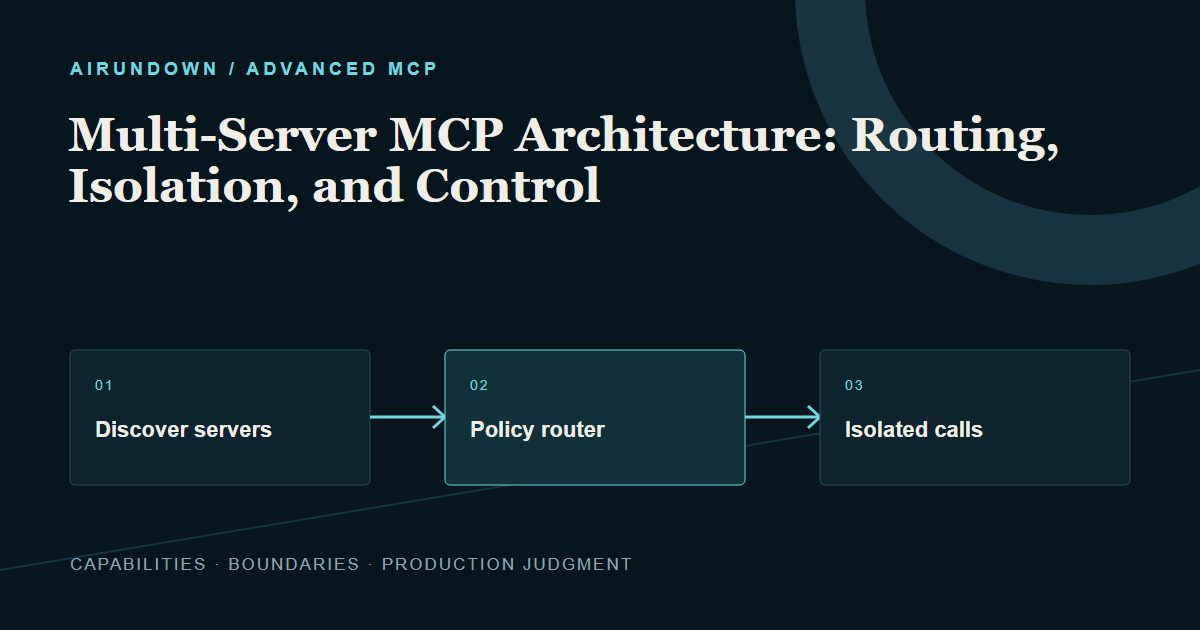
Multi-Server MCP Architecture: Routing, Isolation, and Control
An architecture guide for coordinating multiple MCP servers without creating tool collisions, permission sprawl, or shared failure domains.
-
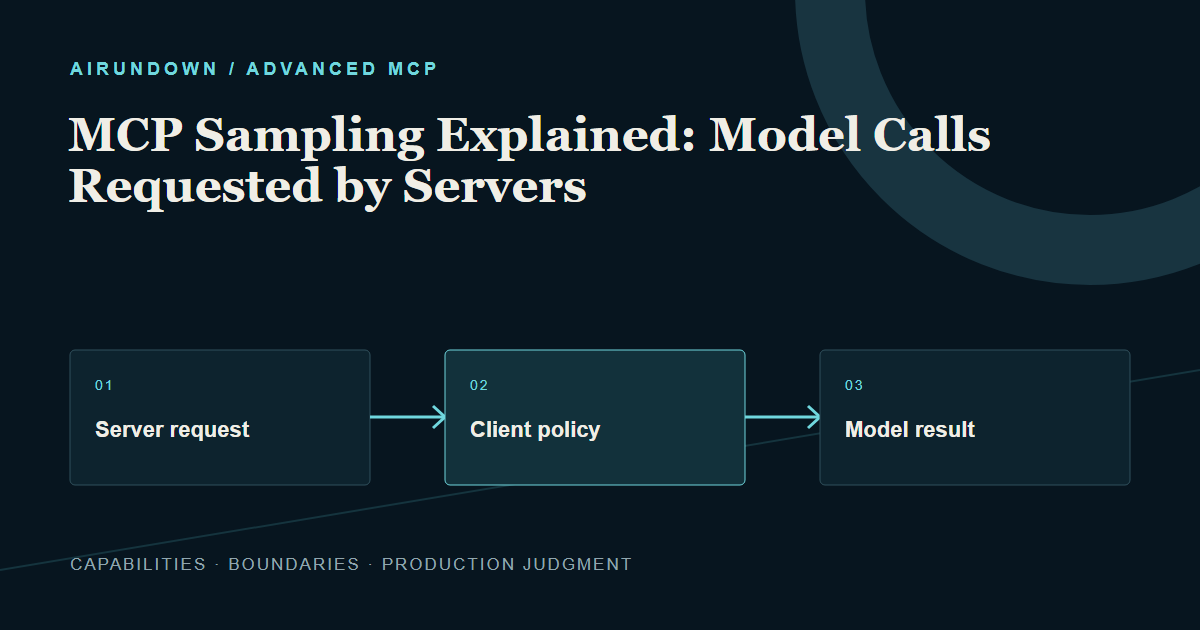
MCP Sampling Explained: Model Calls Requested by Servers
A practical explanation of MCP sampling, including message flow, model preferences, tool use, approvals, security, and current design status.
-
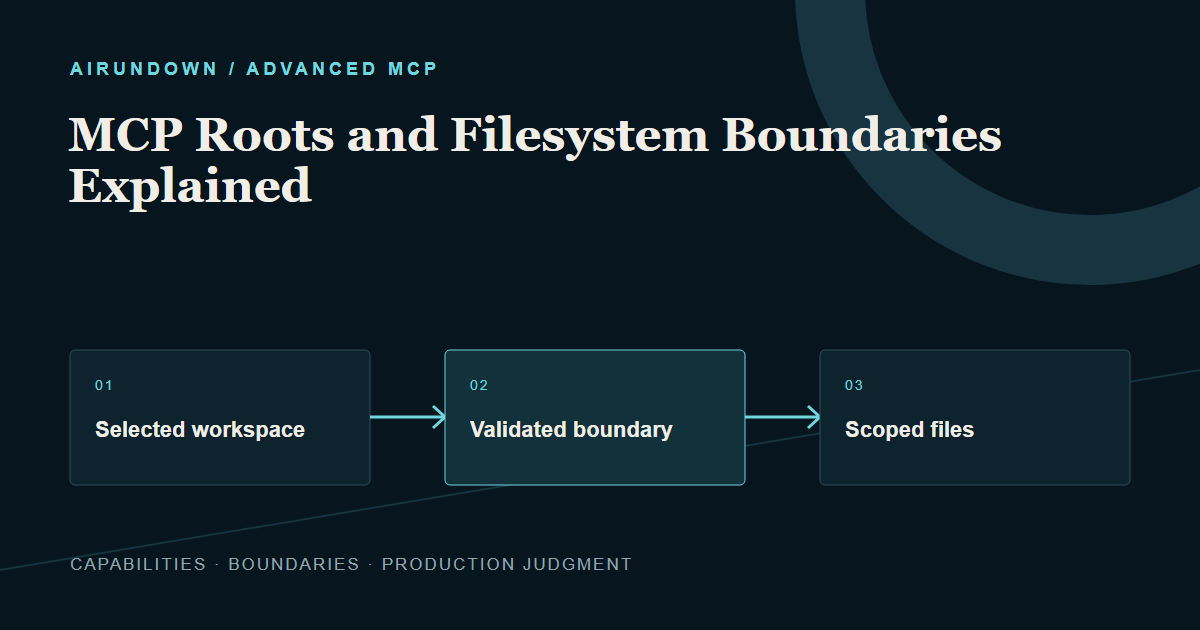
MCP Roots and Filesystem Boundaries Explained
A security-focused guide to MCP roots, file URI validation, workspace boundaries, user consent, symlinks, and modern alternatives.
-
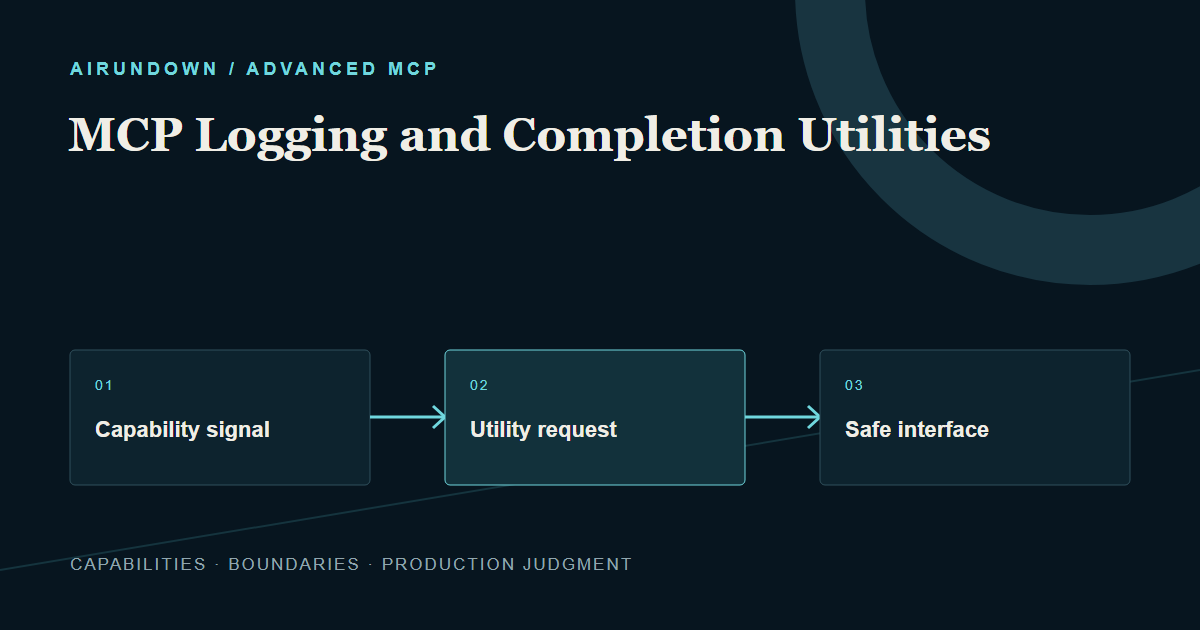
MCP Logging and Completion Utilities
A practical reference to MCP logging notifications and completion suggestions, including current status, security, and implementation boundaries.
-
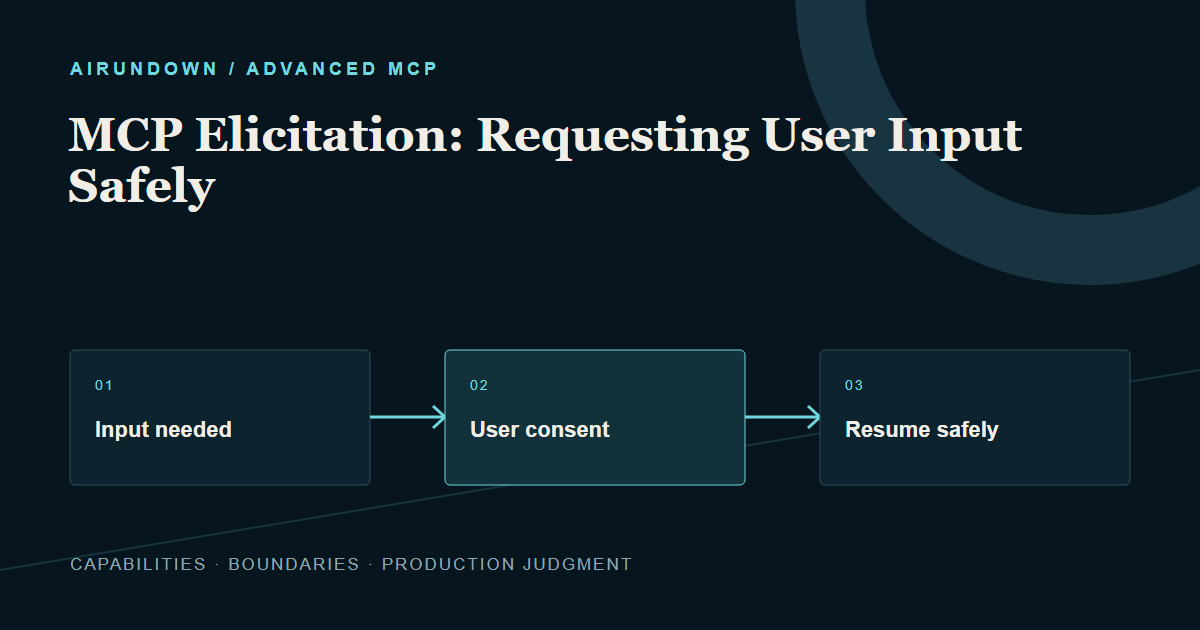
MCP Elicitation: Requesting User Input Safely
A practical guide to requesting missing user input during MCP operations without confusing conversation, consent, or credentials.
-
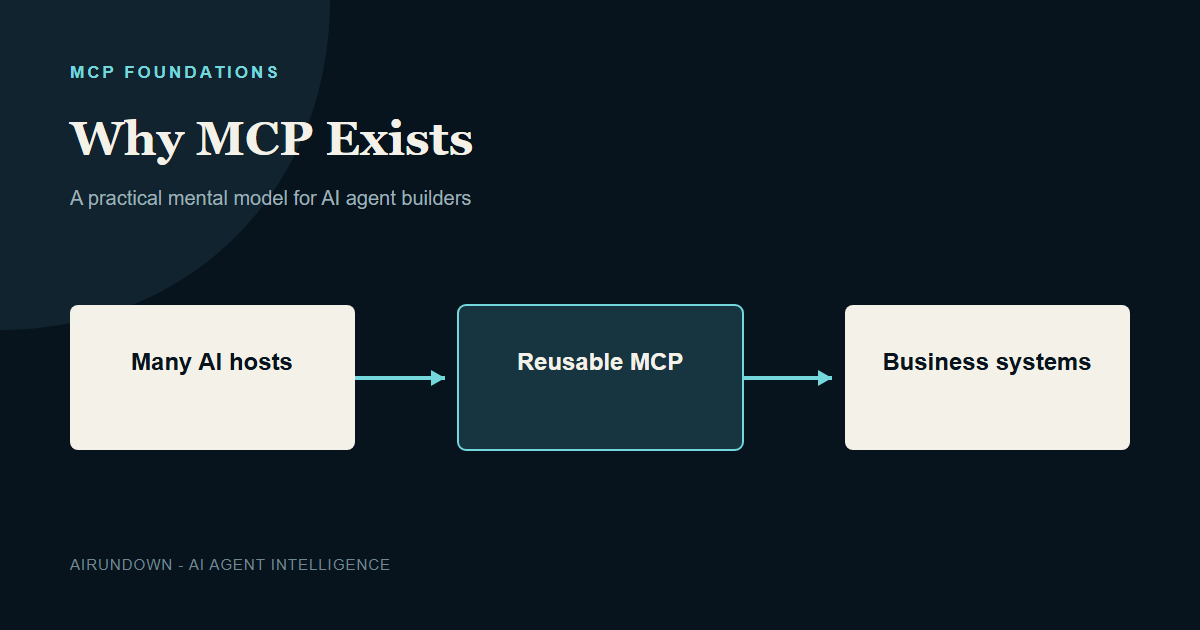
Why MCP Exists: The Integration Problem It Solves
Understand why AI integrations become difficult at scale and how MCP creates a reusable boundary between AI applications and external systems.
-
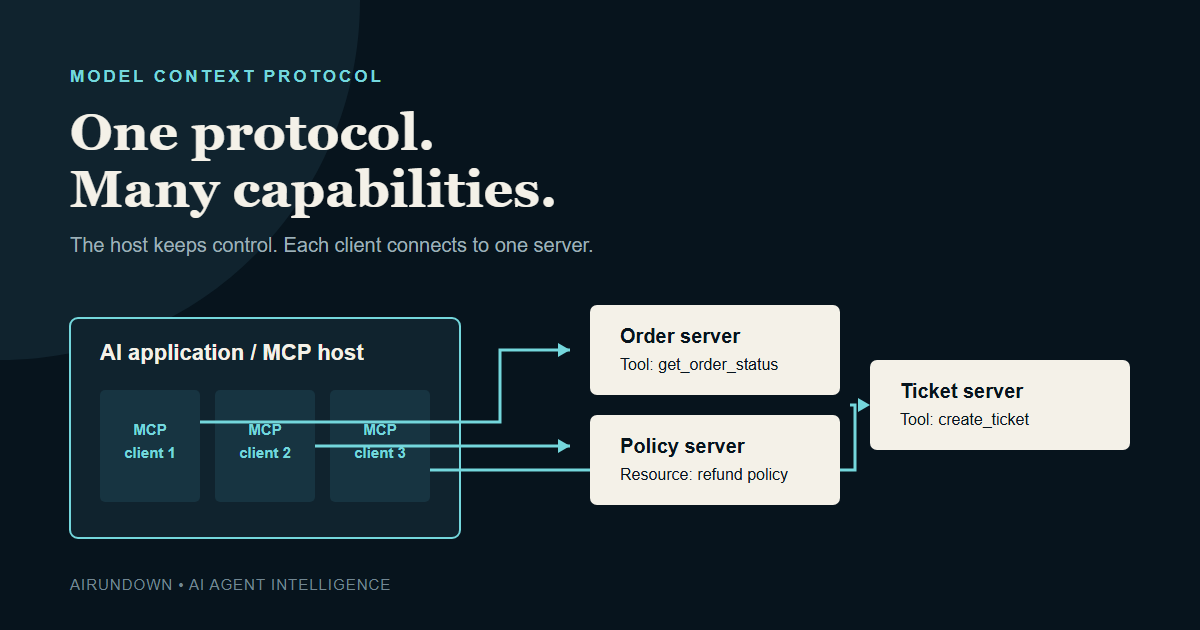
What Is MCP? A Practical Guide for AI Agent Builders
A practical, beginner-friendly guide to the Model Context Protocol: its host-client-server architecture, tools and resources, request flow, trade-offs, and security boundaries.
-
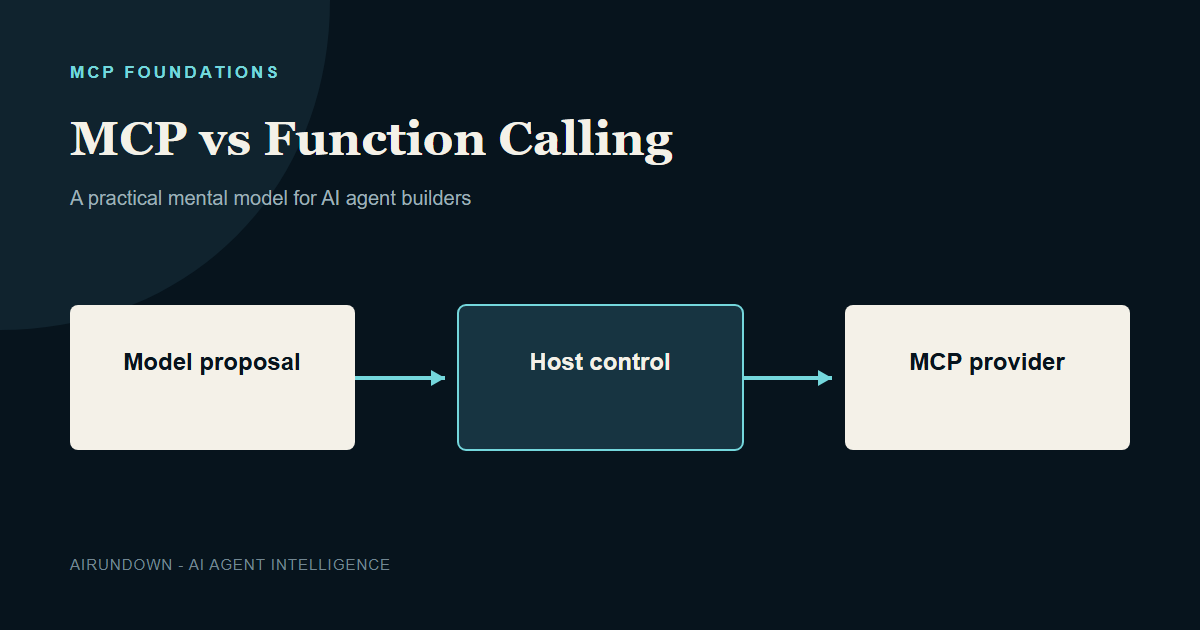
MCP vs Function Calling: What Actually Changes?
A practical comparison of MCP and model function calling, including their boundaries, request flow, portability, security, and combined architecture.
-
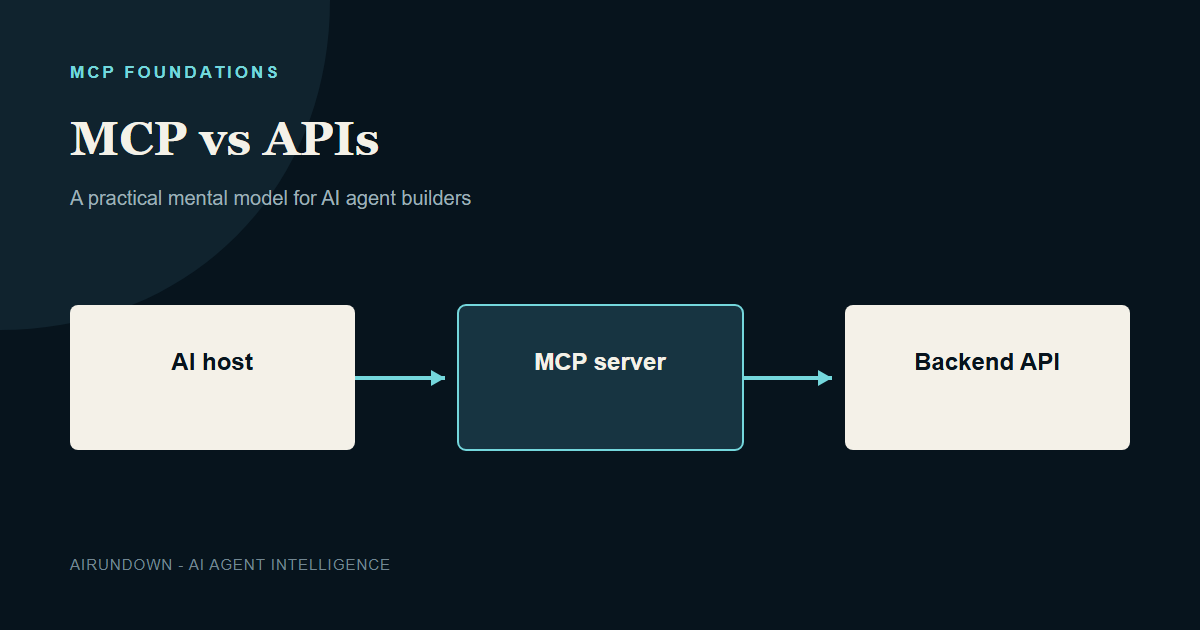
MCP vs APIs: What Changes and When to Use Each
Learn how MCP relates to REST APIs and SDKs, what each layer owns, and why most production MCP servers still call existing APIs.
-
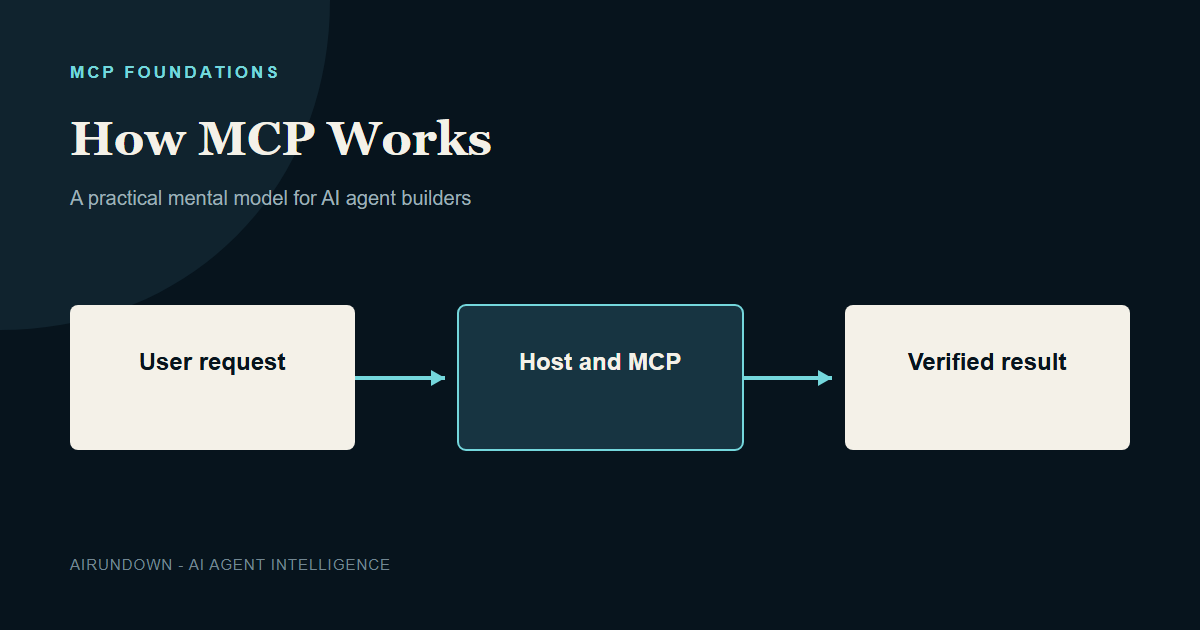
How MCP Works: From User Request to Tool Result
Trace an MCP interaction from server discovery through model tool selection, host authorization, execution, and the final answer.
-
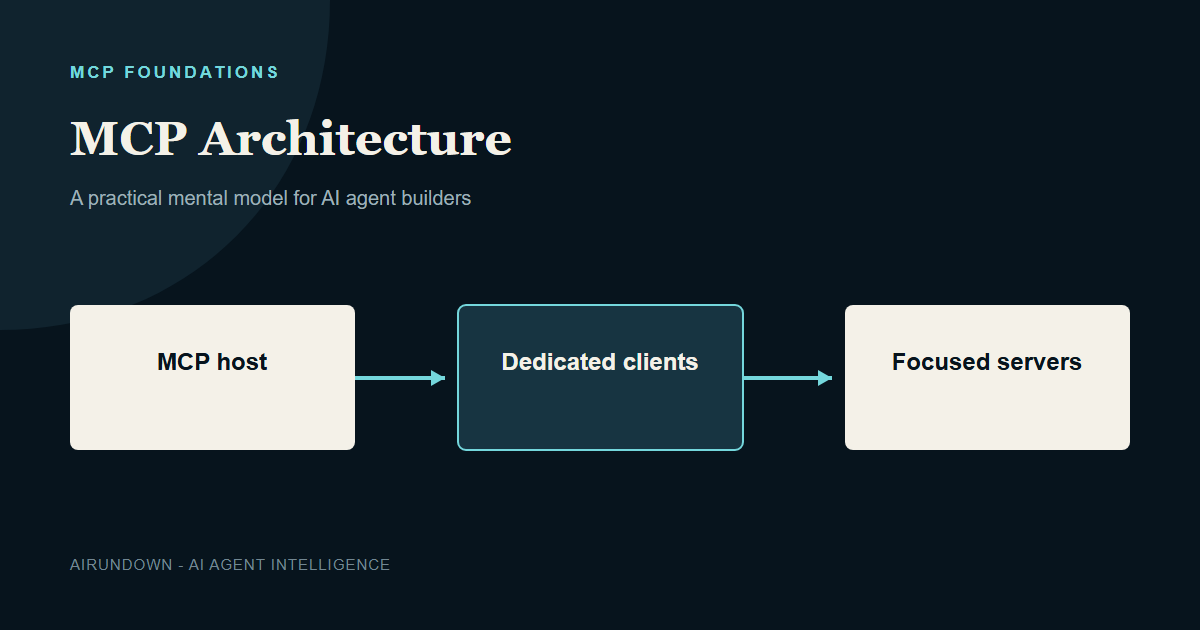
MCP Architecture: Hosts, Clients, Servers, Tools, and Resources
A component-by-component guide to MCP architecture, including host and client responsibilities, server primitives, transports, and trust boundaries.
-
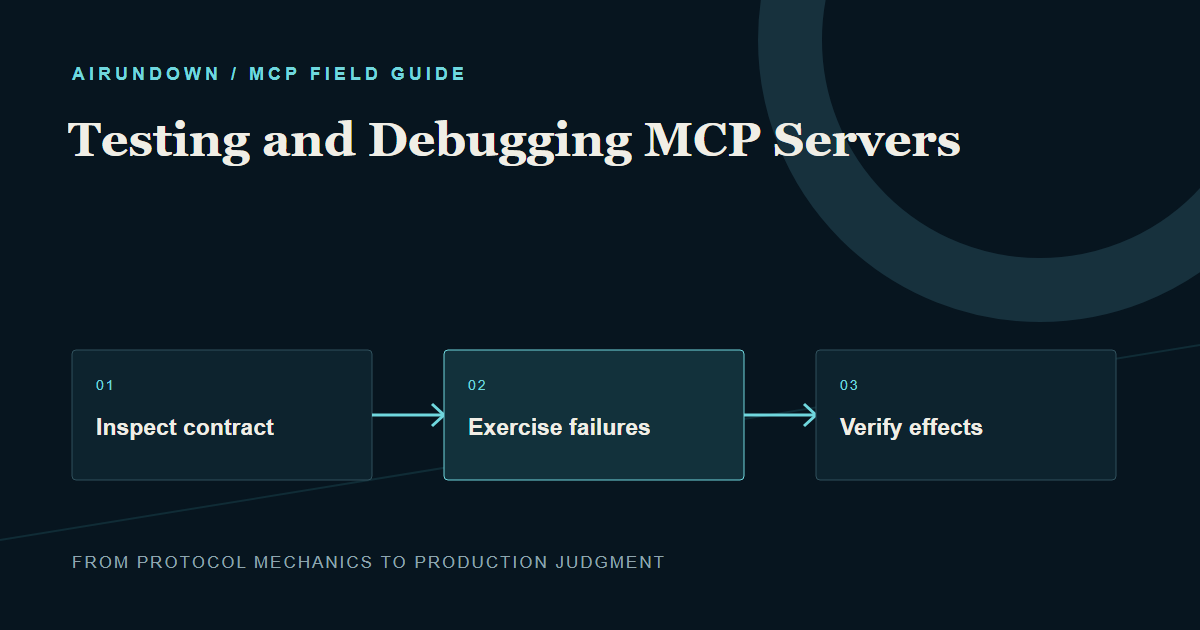
Testing and Debugging MCP Servers
A practical workflow for inspecting, testing, and debugging MCP servers from protocol exchange to downstream side effects.