Multi-Server MCP Architecture: Routing, Isolation, and Control
An architecture guide for coordinating multiple MCP servers without creating tool collisions, permission sprawl, or shared failure domains.
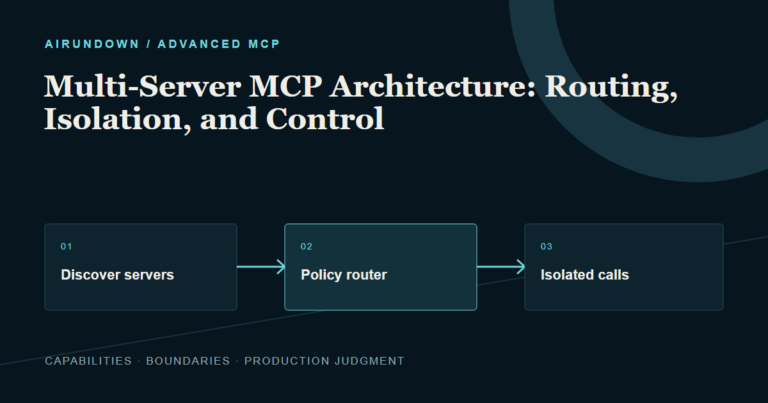
An architecture guide for coordinating multiple MCP servers without creating tool collisions, permission sprawl, or shared failure domains.
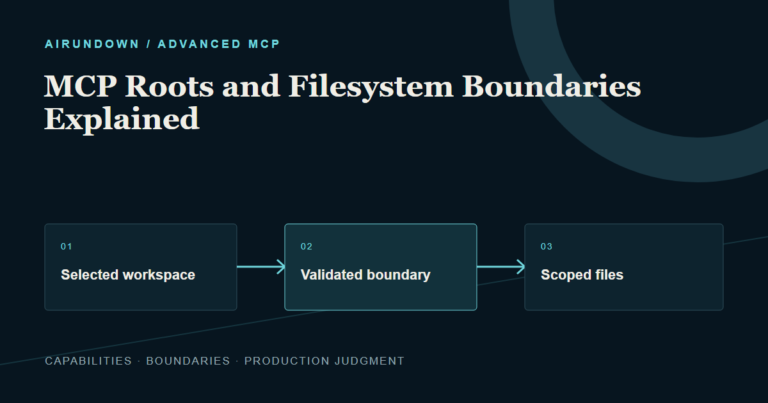
A security-focused guide to MCP roots, file URI validation, workspace boundaries, user consent, symlinks, and modern alternatives.
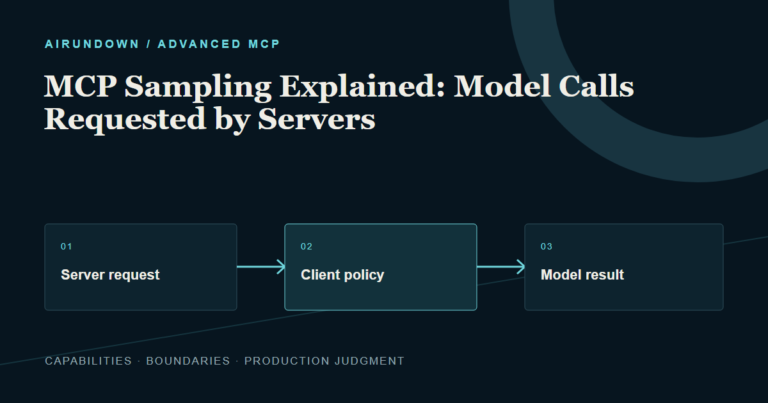
A practical explanation of MCP sampling, including message flow, model preferences, tool use, approvals, security, and current design status.
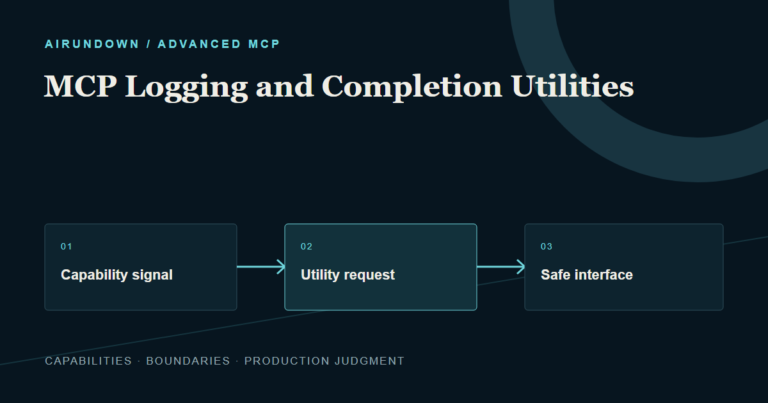
A practical reference to MCP logging notifications and completion suggestions, including current status, security, and implementation boundaries.
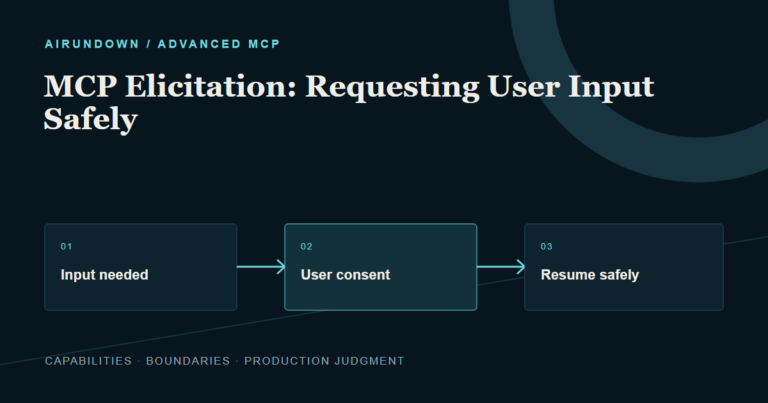
A practical guide to requesting missing user input during MCP operations without confusing conversation, consent, or credentials.
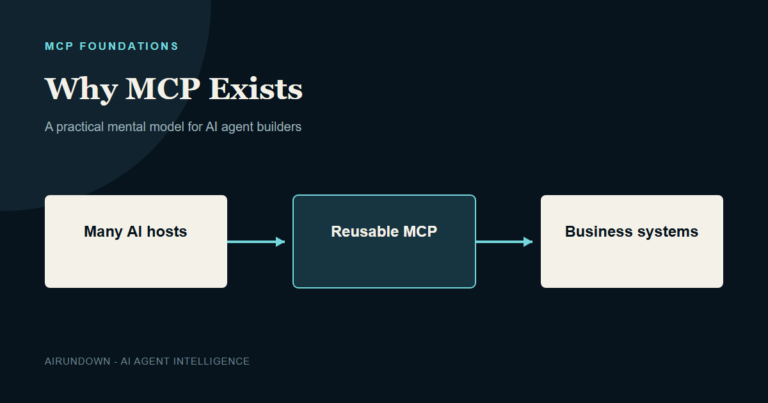
Understand why AI integrations become difficult at scale and how MCP creates a reusable boundary between AI applications and external systems.
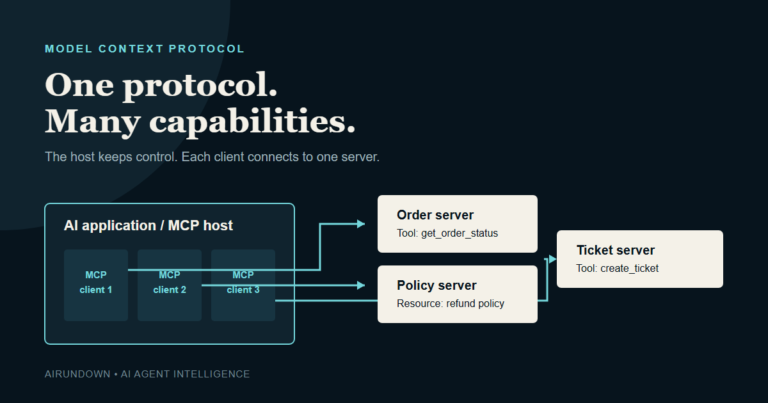
A practical, beginner-friendly guide to the Model Context Protocol: its host-client-server architecture, tools and resources, request flow, trade-offs, and security boundaries.
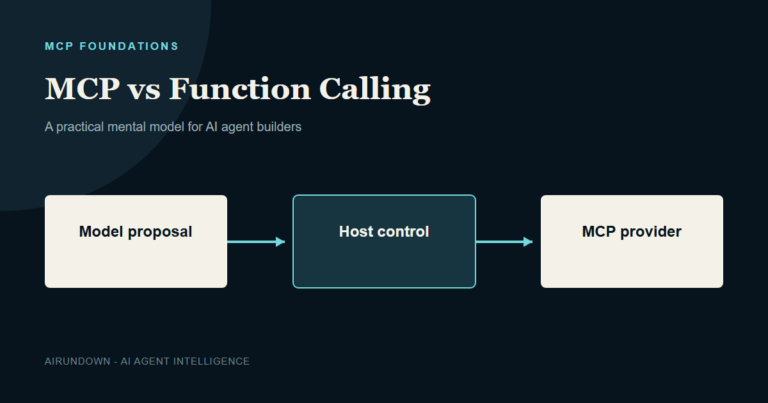
A practical comparison of MCP and model function calling, including their boundaries, request flow, portability, security, and combined architecture.
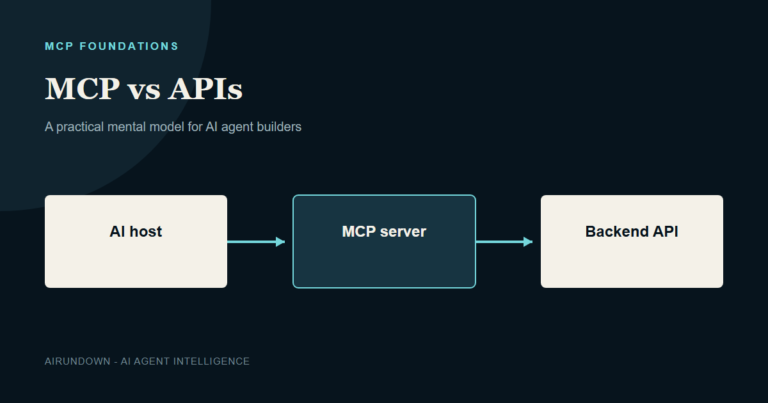
Learn how MCP relates to REST APIs and SDKs, what each layer owns, and why most production MCP servers still call existing APIs.
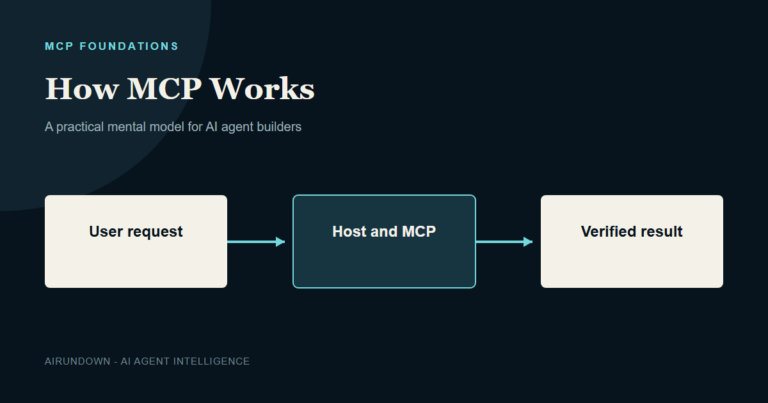
Trace an MCP interaction from server discovery through model tool selection, host authorization, execution, and the final answer.