AI Agent Security Explained
A practical, production-oriented explanation of the security model of an AI agent, with examples, boundaries, trade-offs, and failure handling patterns.
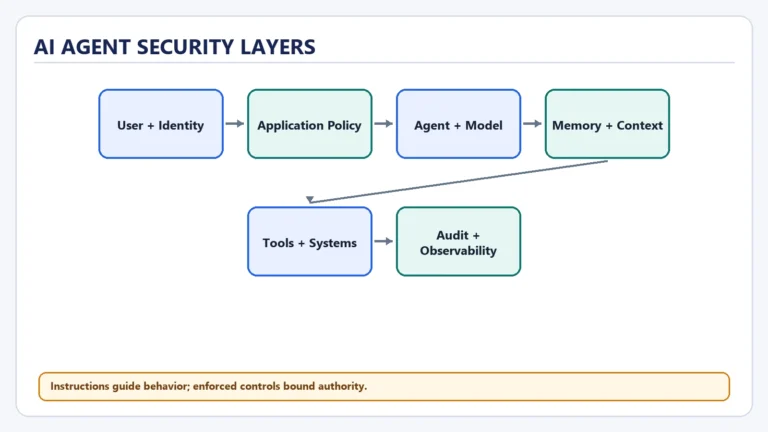
A practical, production-oriented explanation of the security model of an AI agent, with examples, boundaries, trade-offs, and failure handling patterns.
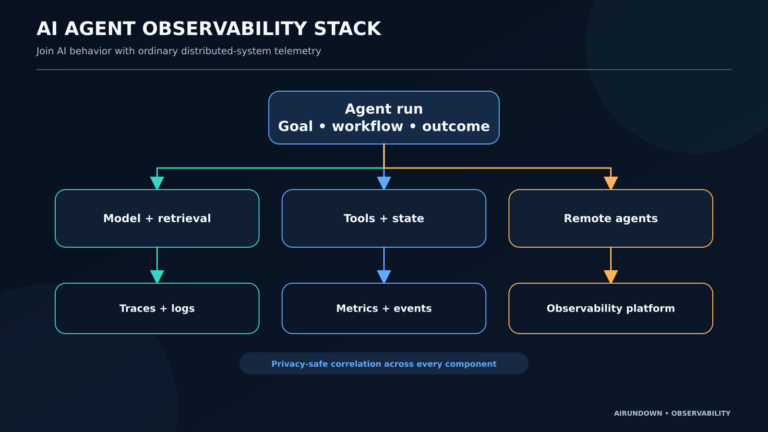
A production observability model for agent, model, retrieval, tool, sub-agent, and infrastructure signals—with privacy and redaction controls.
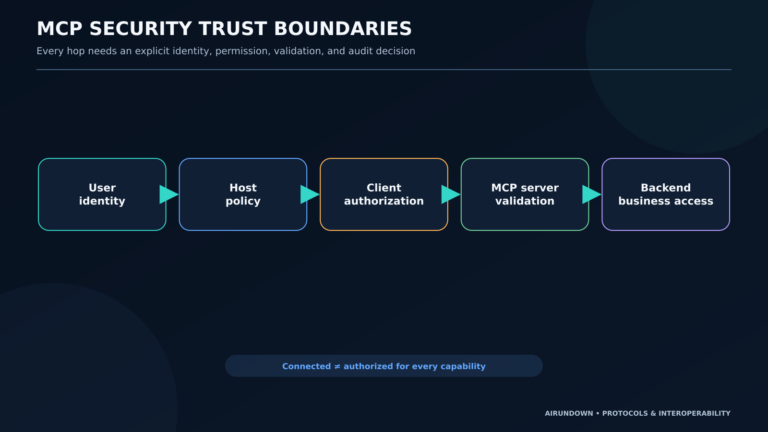
A practical security model for MCP trust boundaries, authorization, least privilege, approvals, external content, backend credentials, and auditability.
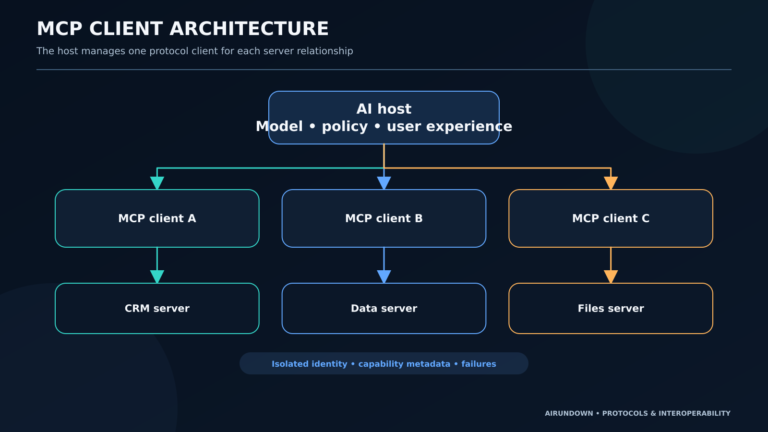
Understand how an MCP host manages dedicated clients, discovers server capabilities, applies policy, invokes operations, and handles failures.
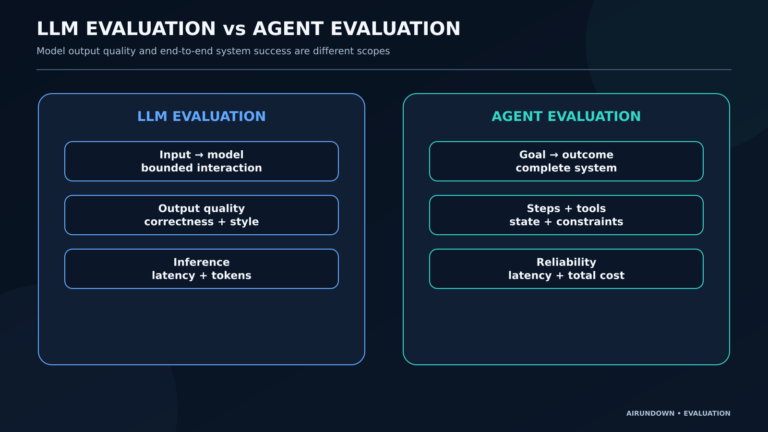
LLM evaluation scores model outputs; agent evaluation measures the whole goal-directed system, including tools, state, constraints, reliability, latency, and cost.
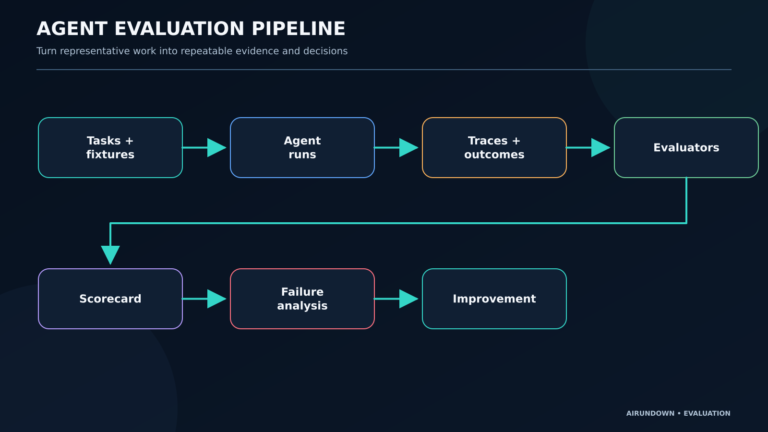
A practical workflow for defining agent success, building evaluation datasets, capturing traces, scoring behavior, analyzing failures, and preventing regressions.
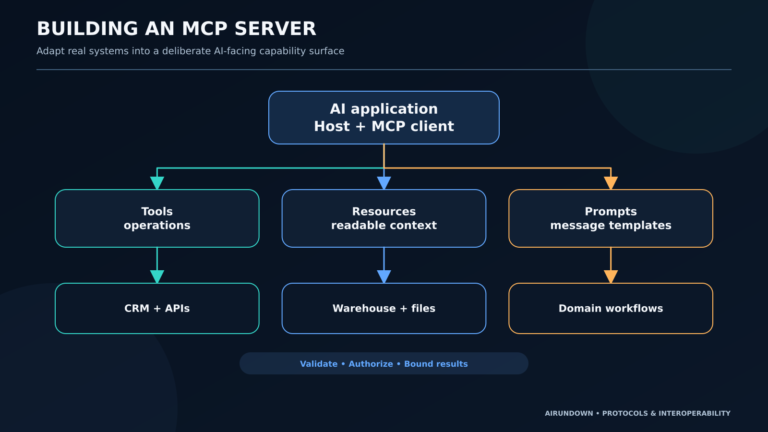
A framework-neutral tutorial for designing, implementing, testing, securing, and deploying an MCP server over real backend systems.
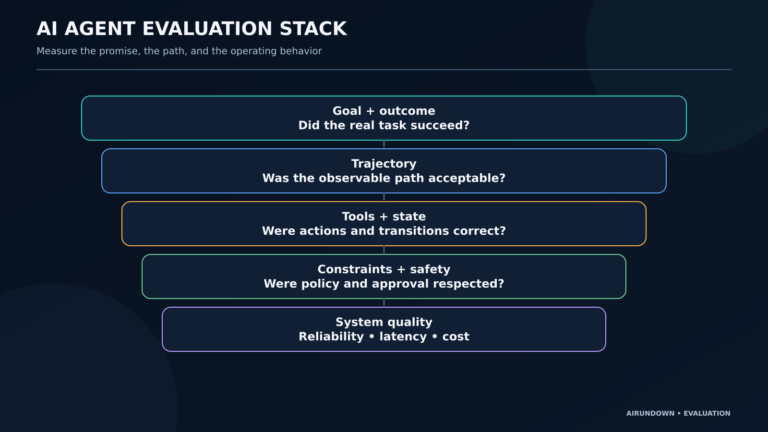
Agent evaluation measures task outcomes, trajectories, tool behavior, constraints, safety, reliability, latency, and cost—not only final prose.
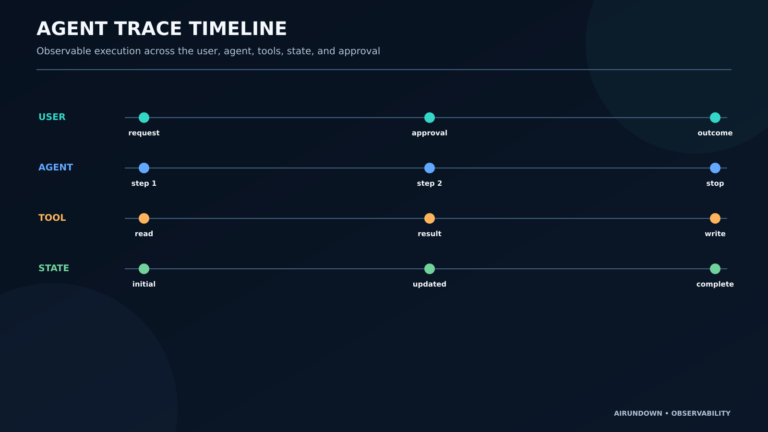
Learn how traces and trajectories represent observable agent execution without requiring storage or exposure of private chain-of-thought.
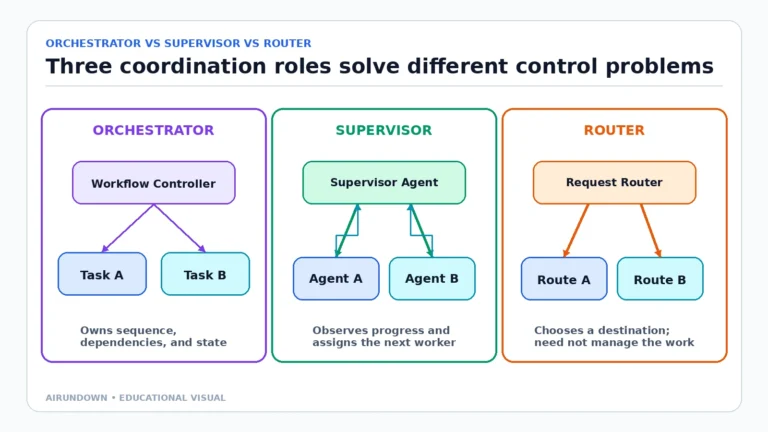
Compare orchestrators, supervisor agents, and routers by purpose, decision ownership, state responsibility, delegation, routing, and workflow control.