Multi-Server MCP Architecture: Routing, Isolation, and Control
An architecture guide for coordinating multiple MCP servers without creating tool collisions, permission sprawl, or shared failure domains.
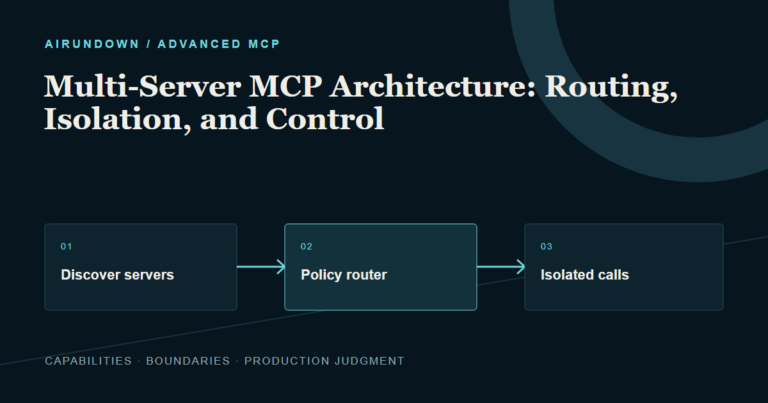
An architecture guide for coordinating multiple MCP servers without creating tool collisions, permission sprawl, or shared failure domains.
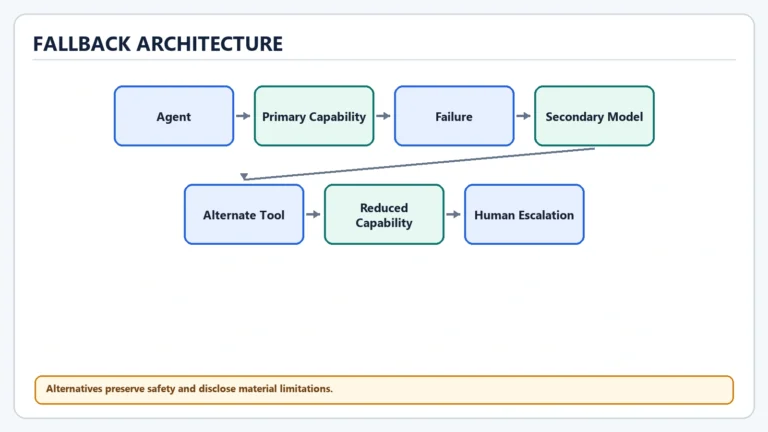
Keep an agent safely useful when models, tools, data, or specialists fail—without fabricating success or silently weakening controls.
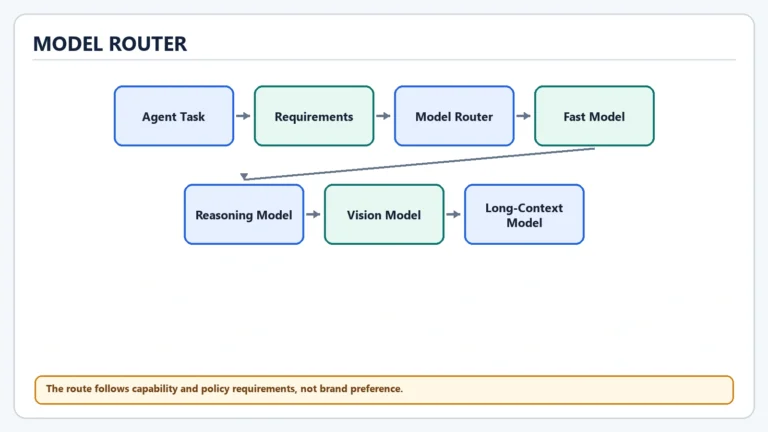
Choose models by task requirements, policy, quality, latency, and cost instead of sending every step to one default.
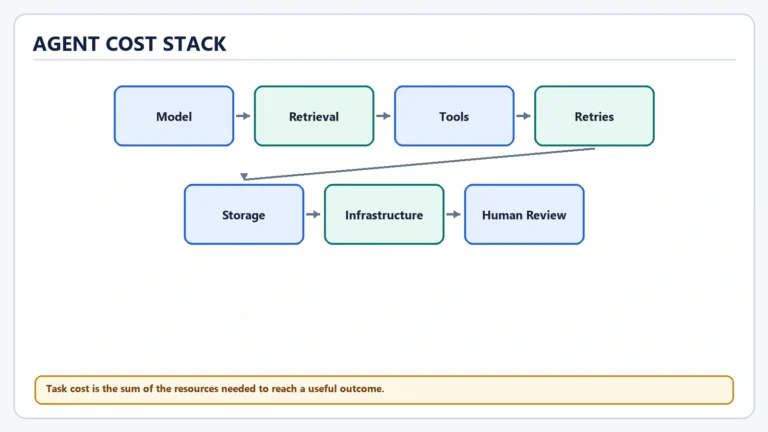
Control the cost of successful agent outcomes, not merely the price of one model call.
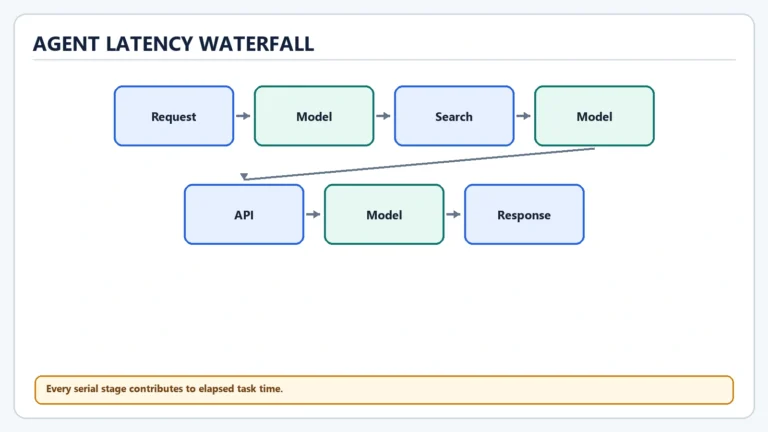
Why multi-step agents feel slow, where elapsed time accumulates, and how to improve speed without breaking the task.
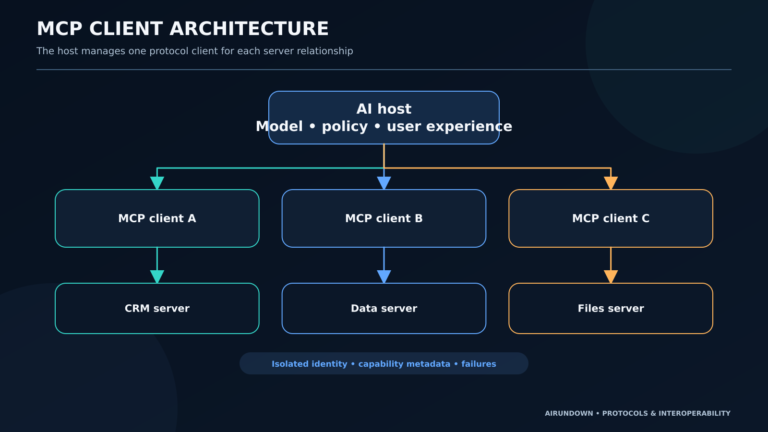
Understand how an MCP host manages dedicated clients, discovers server capabilities, applies policy, invokes operations, and handles failures.
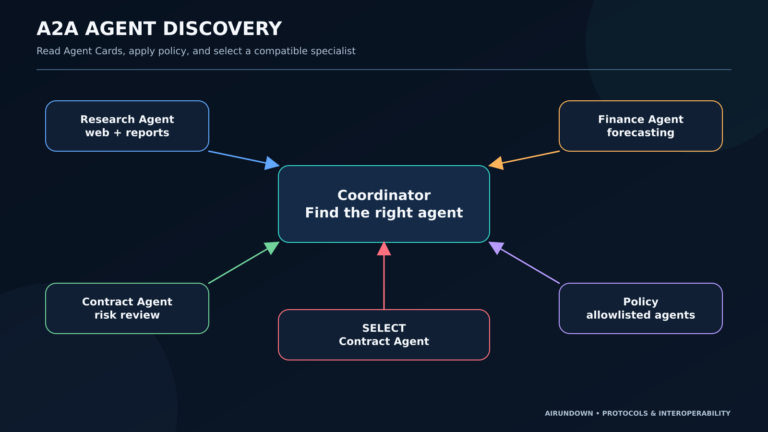
Learn how A2A clients discover remote agents, read Agent Cards, match skills and interfaces, evaluate suitability, and begin an interaction.
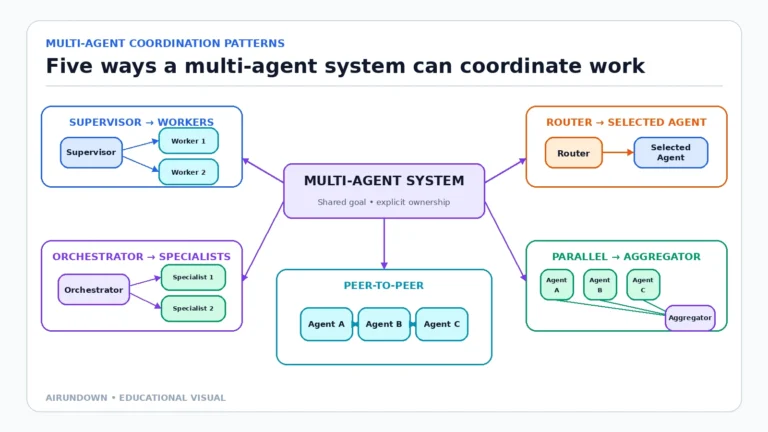
Learn seven practical multi-agent coordination patterns and how they manage roles, ownership, state, handoffs, aggregation, conflicts, and stopping.
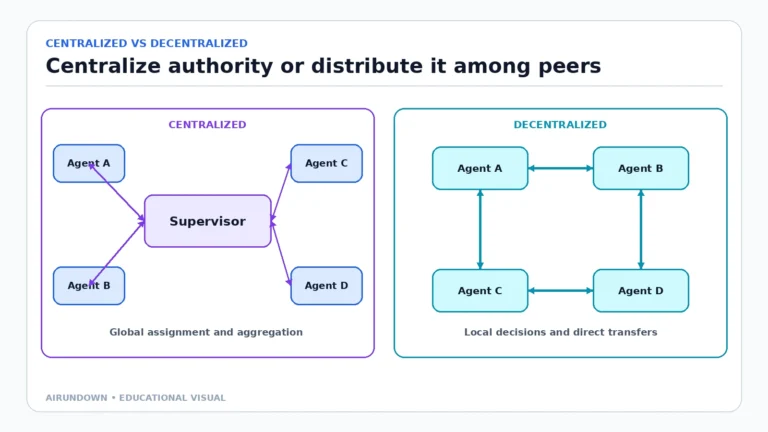
Compare centralized, decentralized, and hybrid multi-agent architectures across control, state, coordination, scale, observability, governance, and resilience.
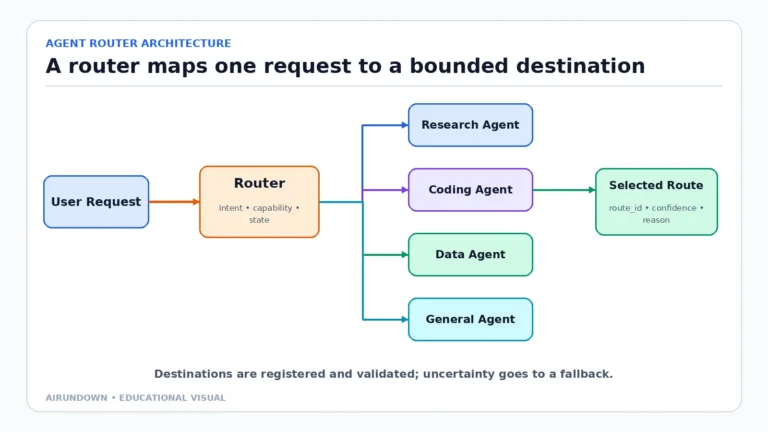
Learn seven agent-routing patterns, from deterministic rules and classifiers to semantic, capability-aware, hierarchical, and fallback routing.