Centralized vs Decentralized Multi-Agent Architectures
Compare centralized, decentralized, and hybrid multi-agent architectures across control, state, coordination, scale, observability, governance, and resilience.
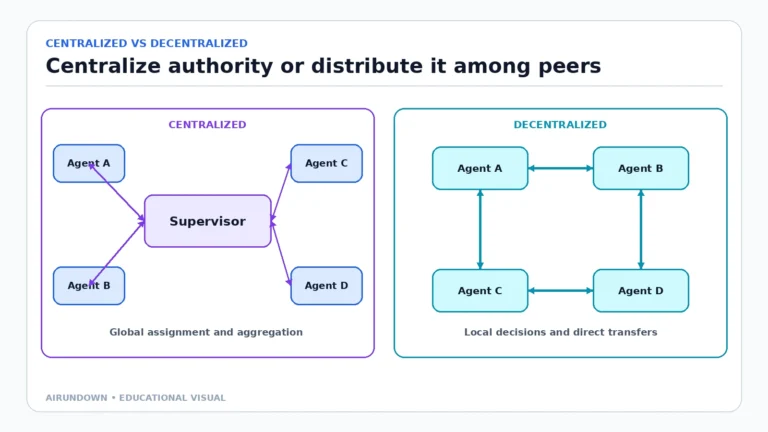
Compare centralized, decentralized, and hybrid multi-agent architectures across control, state, coordination, scale, observability, governance, and resilience.
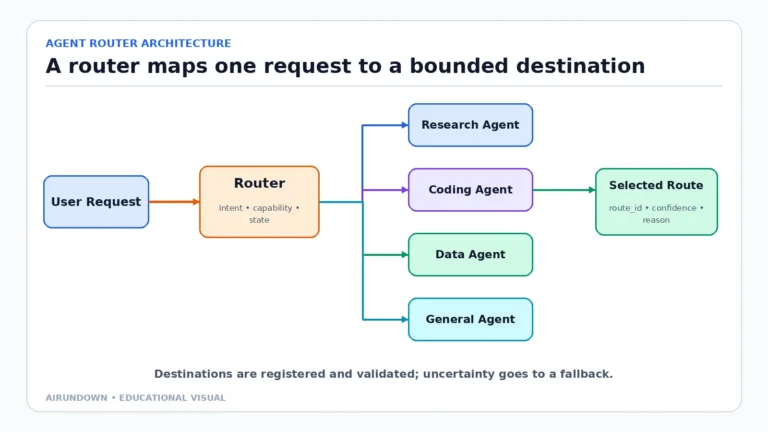
Learn seven agent-routing patterns, from deterministic rules and classifiers to semantic, capability-aware, hierarchical, and fallback routing.
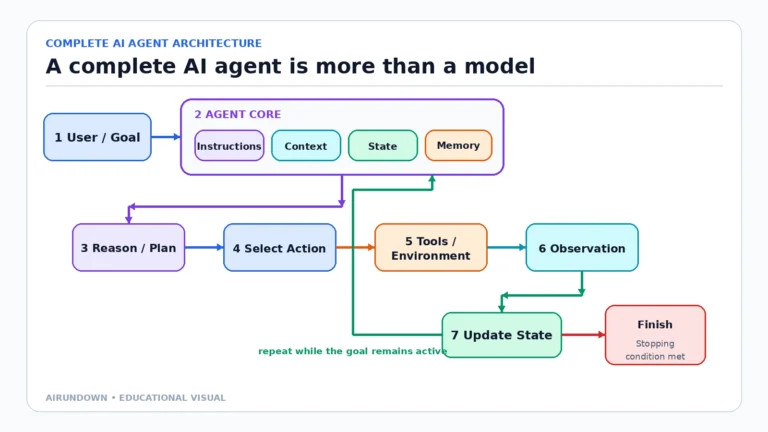
Understand modern AI-agent architecture from goals and instructions through reasoning, tools, observations, state updates, guardrails, and stopping.
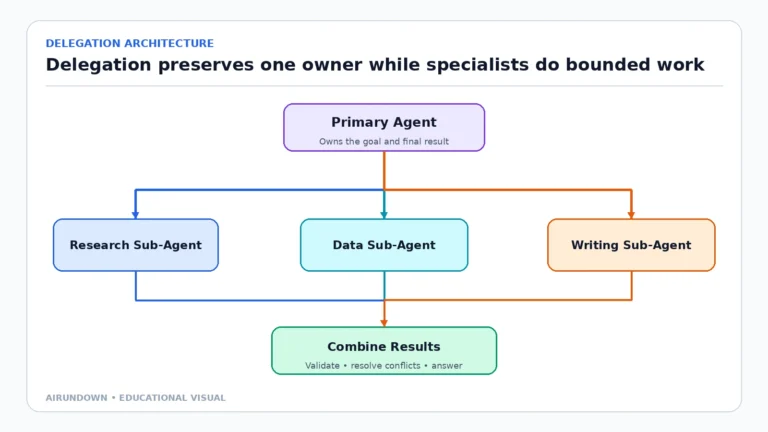
Learn how delegation, handoffs, and sub-agents divide work while preserving task ownership, context, state, permissions, and reliable result contracts.
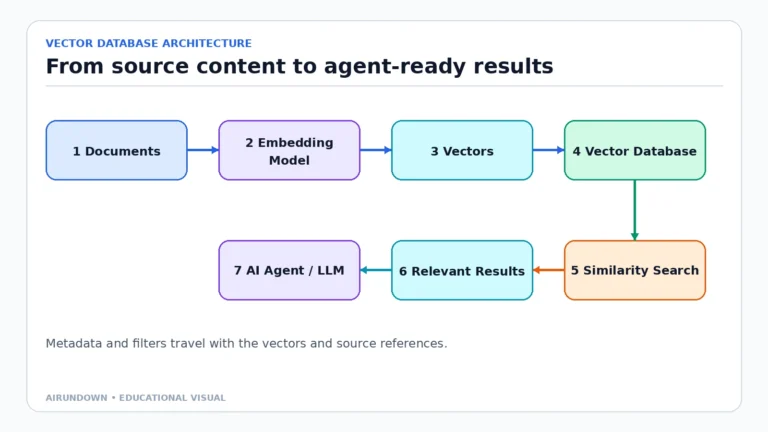
Learn how vector databases store embeddings, power semantic search, and support RAG and memory without replacing a knowledge base or relational database.
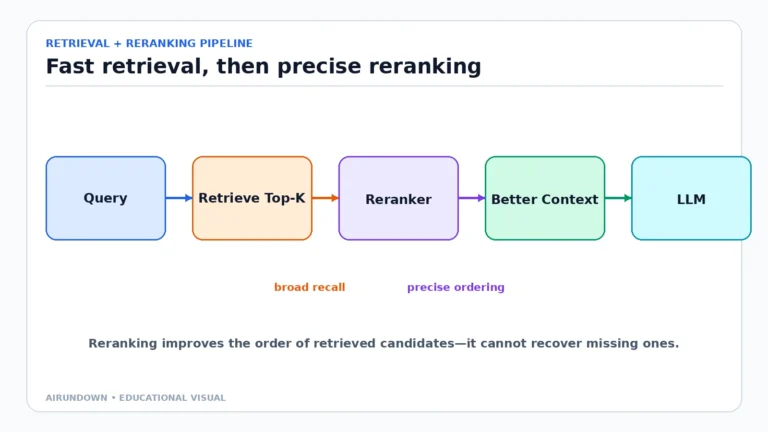
Learn why RAG pipelines rerank retrieved candidates, how cross-encoders and other methods improve ordering, and what reranking cannot fix.
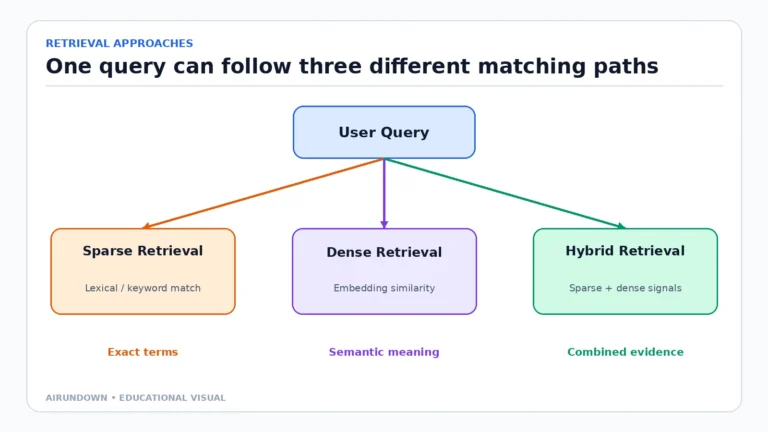
Compare sparse, dense, and hybrid retrieval by matching signal, strengths, failure modes, fusion methods, and the evidence needed to choose a RAG baseline.
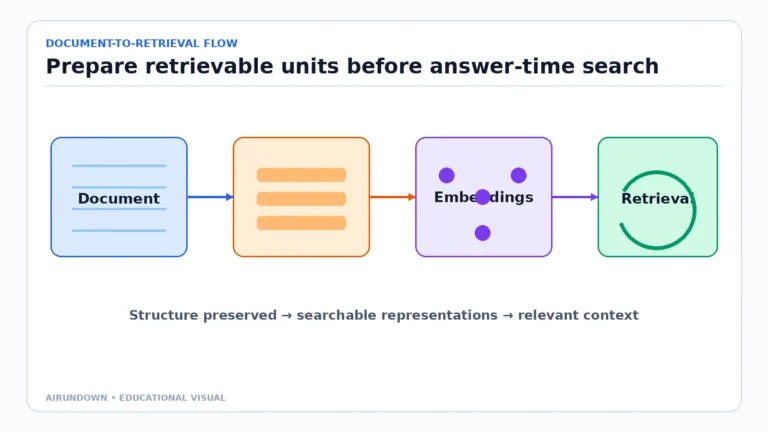
Compare fixed-size, recursive, semantic, and document-aware chunking for RAG, with practical guidance on chunk size, overlap, metadata, and evaluation.
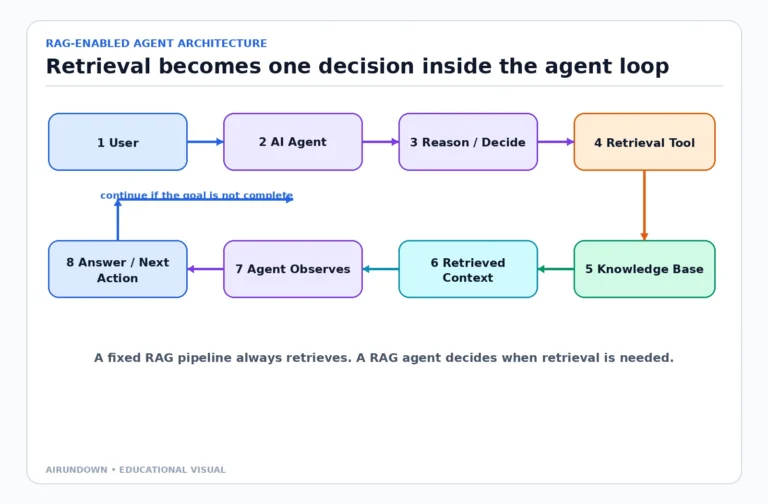
Build a framework-neutral RAG agent with a controlled retrieval tool, attributable evidence, bounded loops, citation checks, traces, and layered evaluation.
A beginner-friendly mental model of embeddings, vectors, similarity, and how AI agents use them for retrieval and memory without confusing similarity with truth.