Agent Stopping Conditions Explained
A practical, production-oriented explanation of agent stopping conditions, with examples, boundaries, trade-offs, and failure handling patterns.
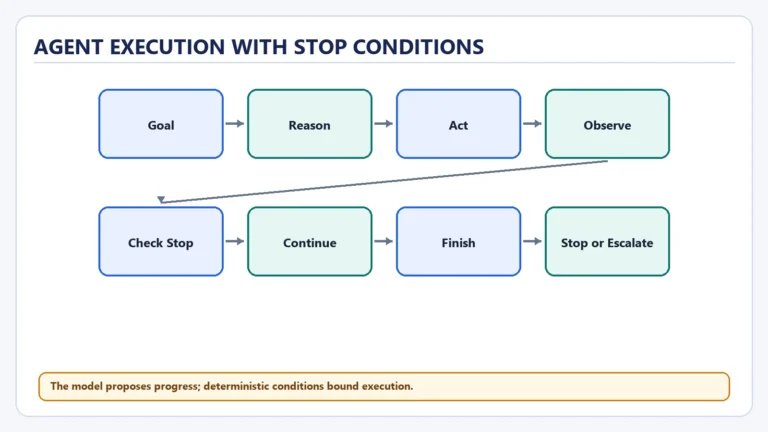
A practical, production-oriented explanation of agent stopping conditions, with examples, boundaries, trade-offs, and failure handling patterns.
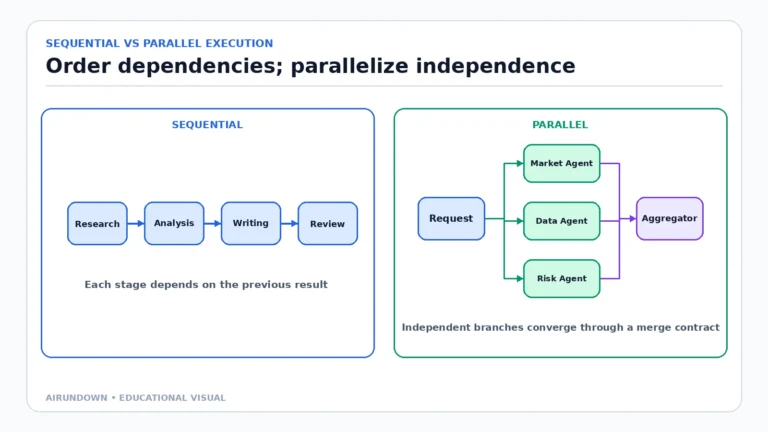
Compare sequential, parallel, and hybrid agent execution by dependencies, latency, cost, state transfer, synchronization, aggregation, and failure handling.
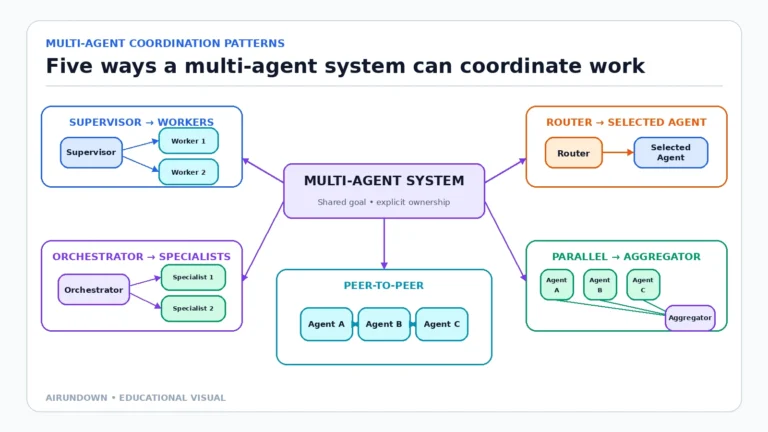
Learn seven practical multi-agent coordination patterns and how they manage roles, ownership, state, handoffs, aggregation, conflicts, and stopping.
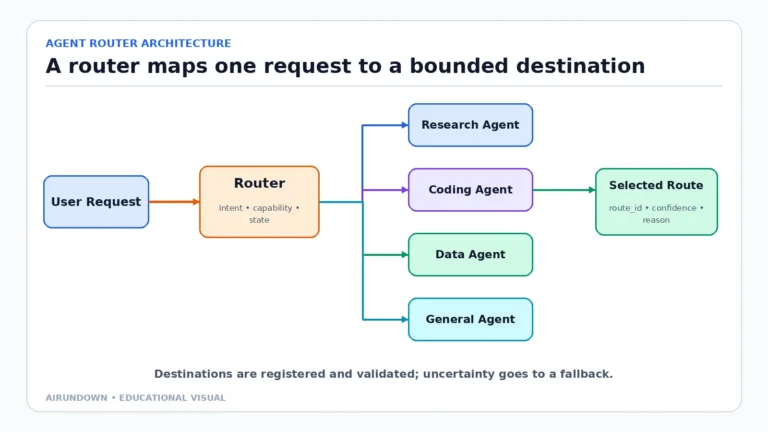
Learn seven agent-routing patterns, from deterministic rules and classifiers to semantic, capability-aware, hierarchical, and fallback routing.
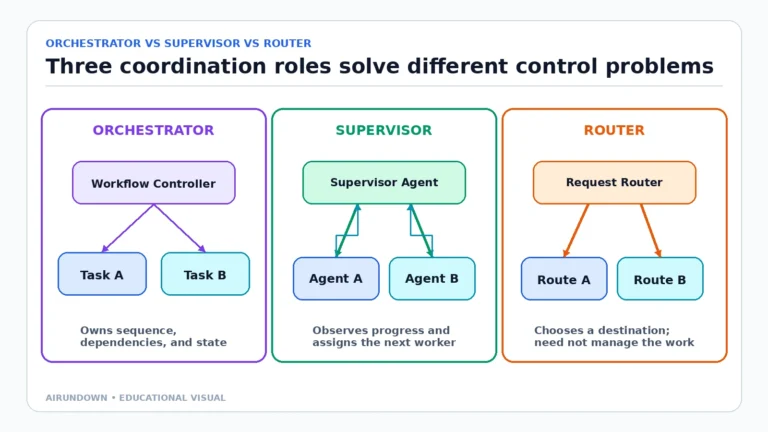
Compare orchestrators, supervisor agents, and routers by purpose, decision ownership, state responsibility, delegation, routing, and workflow control.
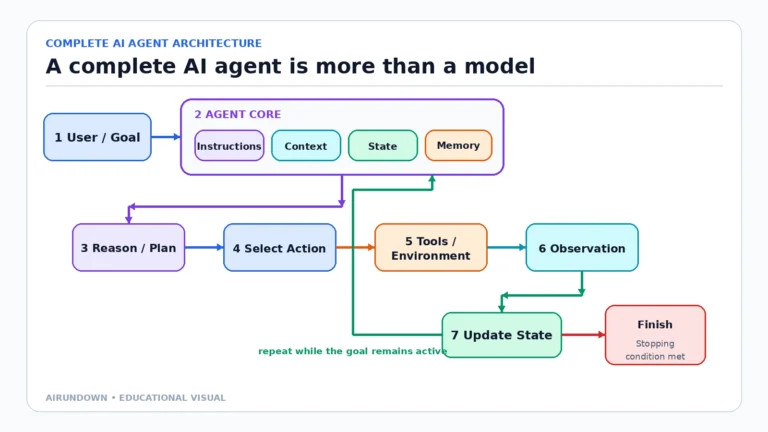
Understand modern AI-agent architecture from goals and instructions through reasoning, tools, observations, state updates, guardrails, and stopping.
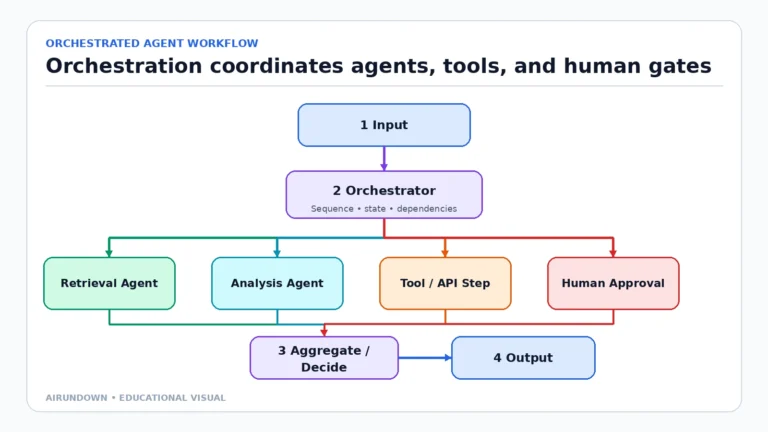
Learn how agent workflows and orchestration coordinate steps, dependencies, branches, parallel work, retries, checkpoints, tools, agents, and humans.
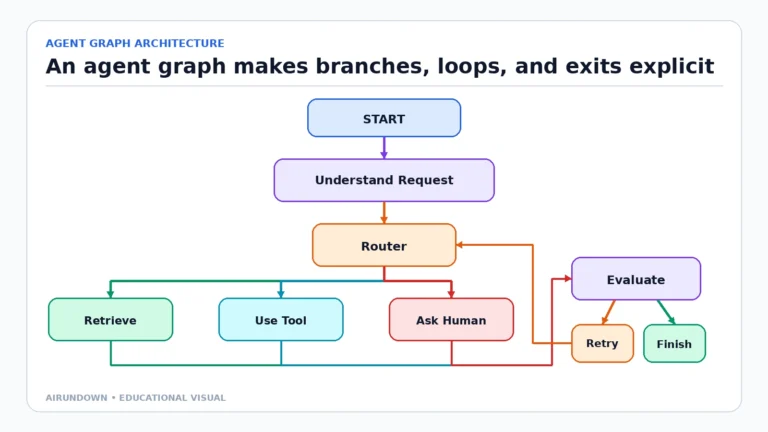
Learn how agent graphs and state machines make nodes, edges, branches, loops, checkpoints, transitions, retries, and terminal outcomes explicit.
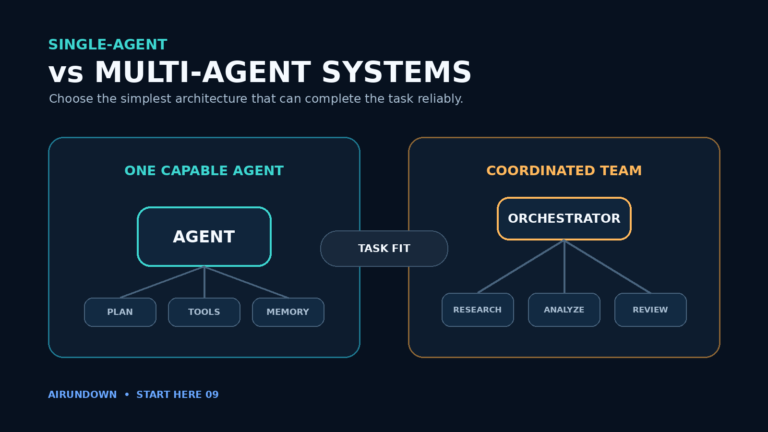
Learn how single-agent and multi-agent systems differ, what extra coordination costs, and how to choose the simplest architecture that works.
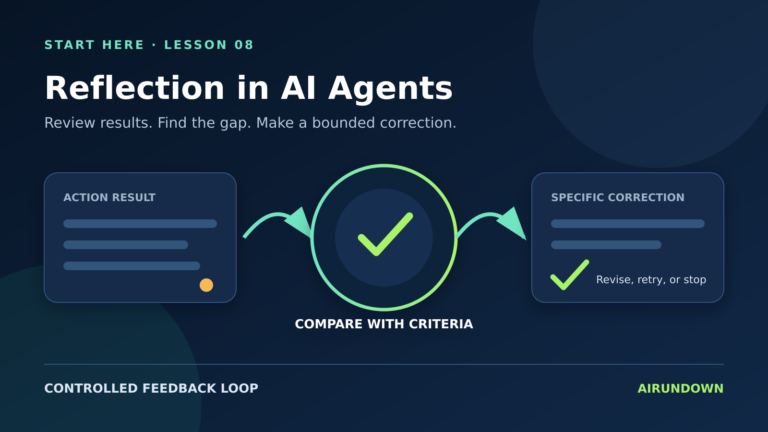
Learn how AI agents use feedback, critique, and execution review to detect mistakes, revise their approach, and improve results without endless retry loops.