Latest Intelligence
AI Agent Intelligence
Practical guidance for understanding, building, architecting, and operating AI agent systems—from foundational concepts to production reliability.
-
RAG vs Agent Memory
A practical comparison of external knowledge retrieval and agent memory, including their overlap, different data lifecycles, and shared vector infrastructure.
-
RAG vs AI Agent: What’s the Difference?
A decision-focused comparison of RAG knowledge retrieval and AI-agent execution, including when a simple RAG pipeline is enough and when an agent is justified.
-
What Is RAG? Retrieval-Augmented Generation Explained
A practical introduction to retrieval-augmented generation, why external knowledge matters, and where RAG fits beside fine-tuning, memory, and AI agents.
-
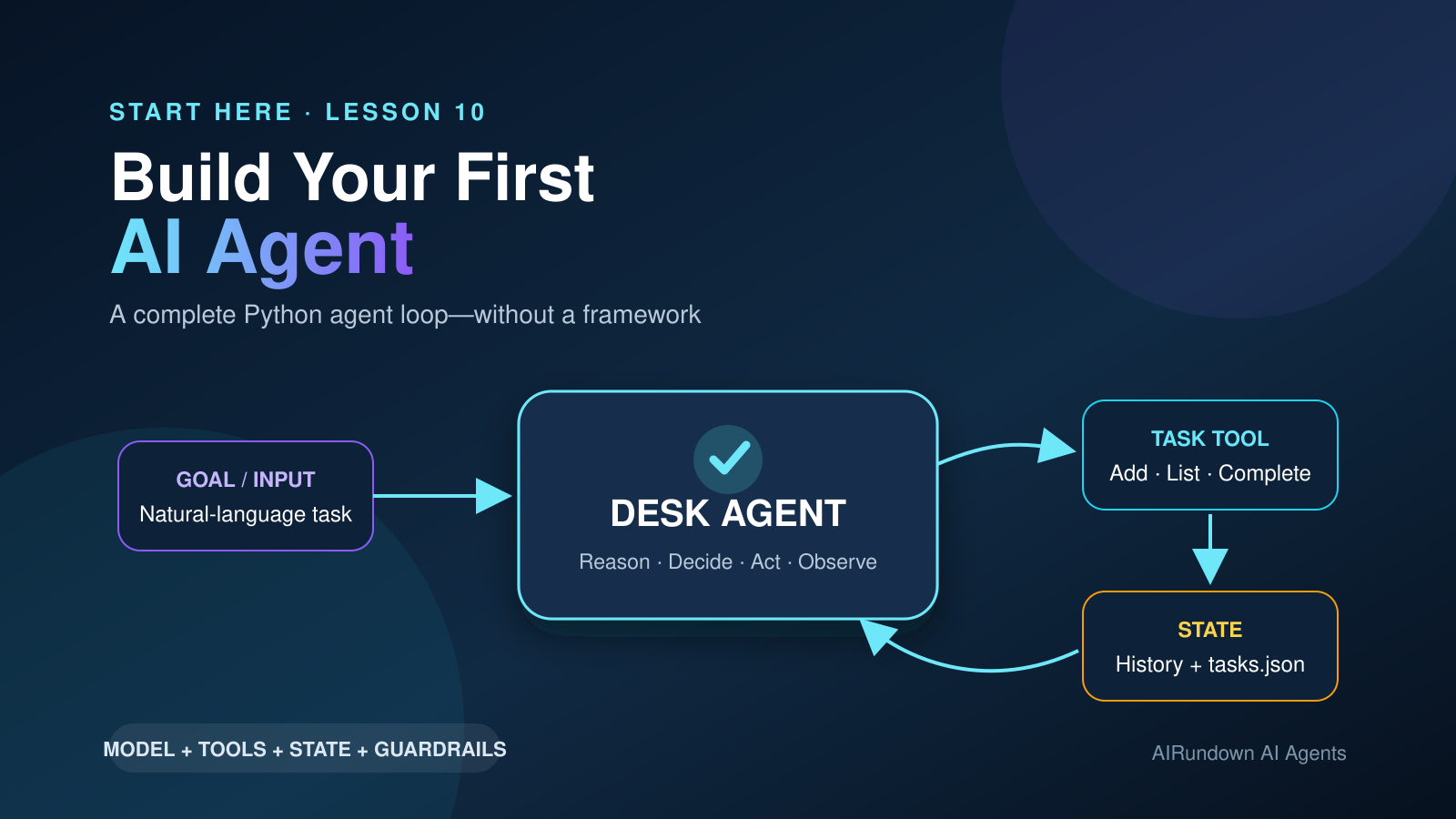
Build Your First AI Agent
Build a genuine AI task agent in plain Python with tool calling, observations, state, guardrails, logging, error handling, and tests.
-
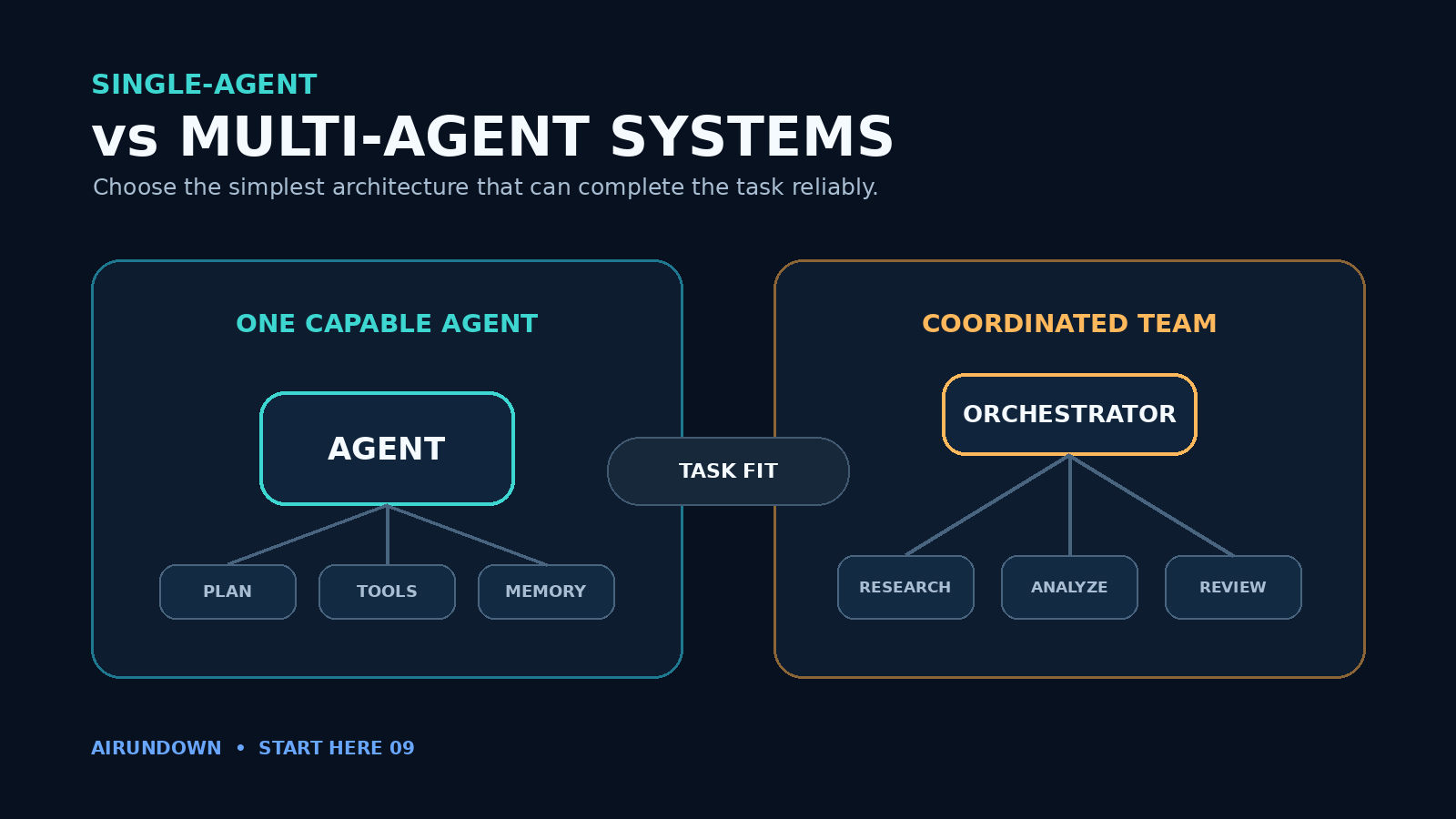
Single-Agent vs Multi-Agent Systems
Learn how single-agent and multi-agent systems differ, what extra coordination costs, and how to choose the simplest architecture that works.
-
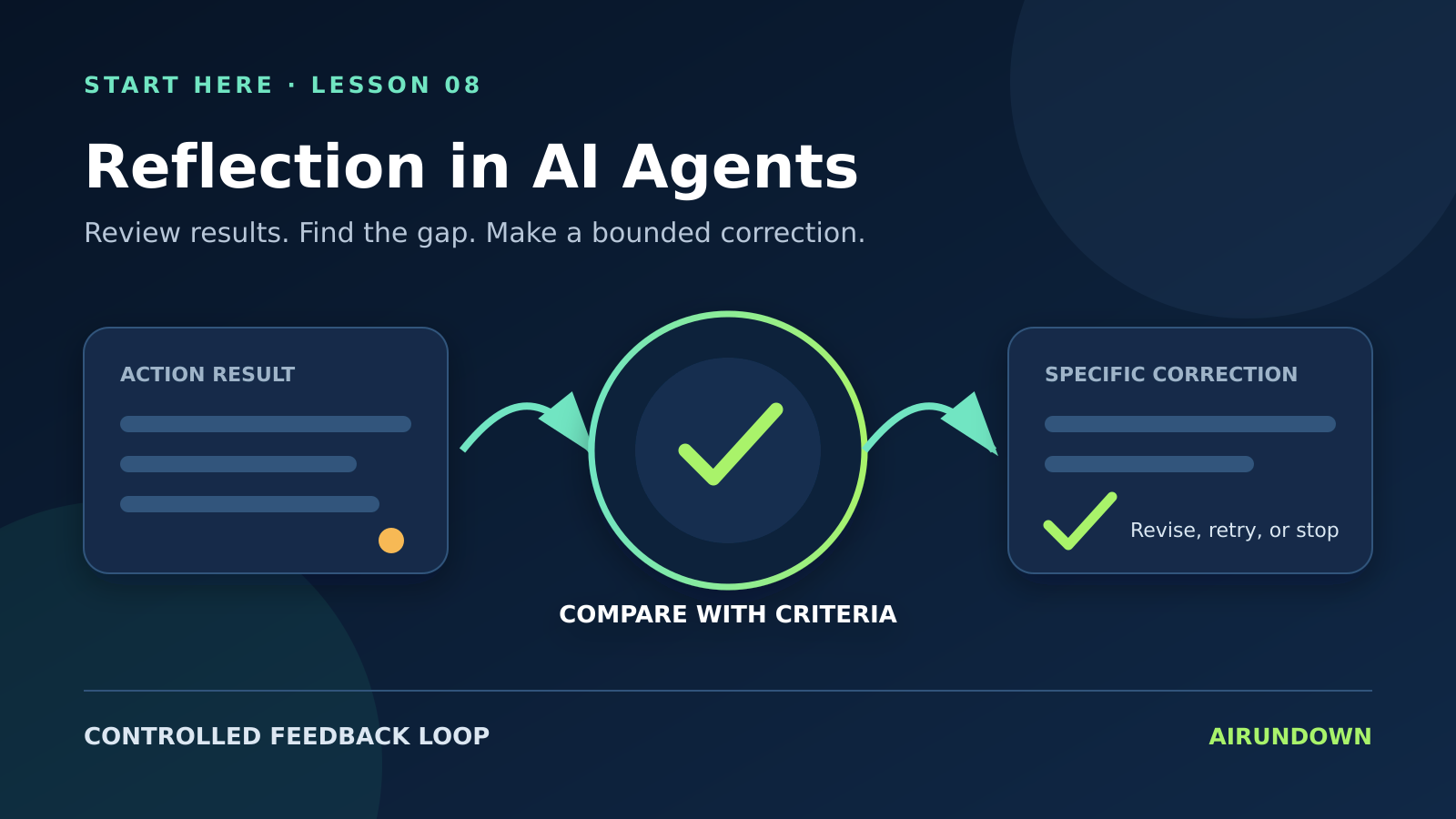
Reflection in AI Agents: How Agents Review, Correct, and Improve Their Work
Learn how AI agents use feedback, critique, and execution review to detect mistakes, revise their approach, and improve results without endless retry loops.
-
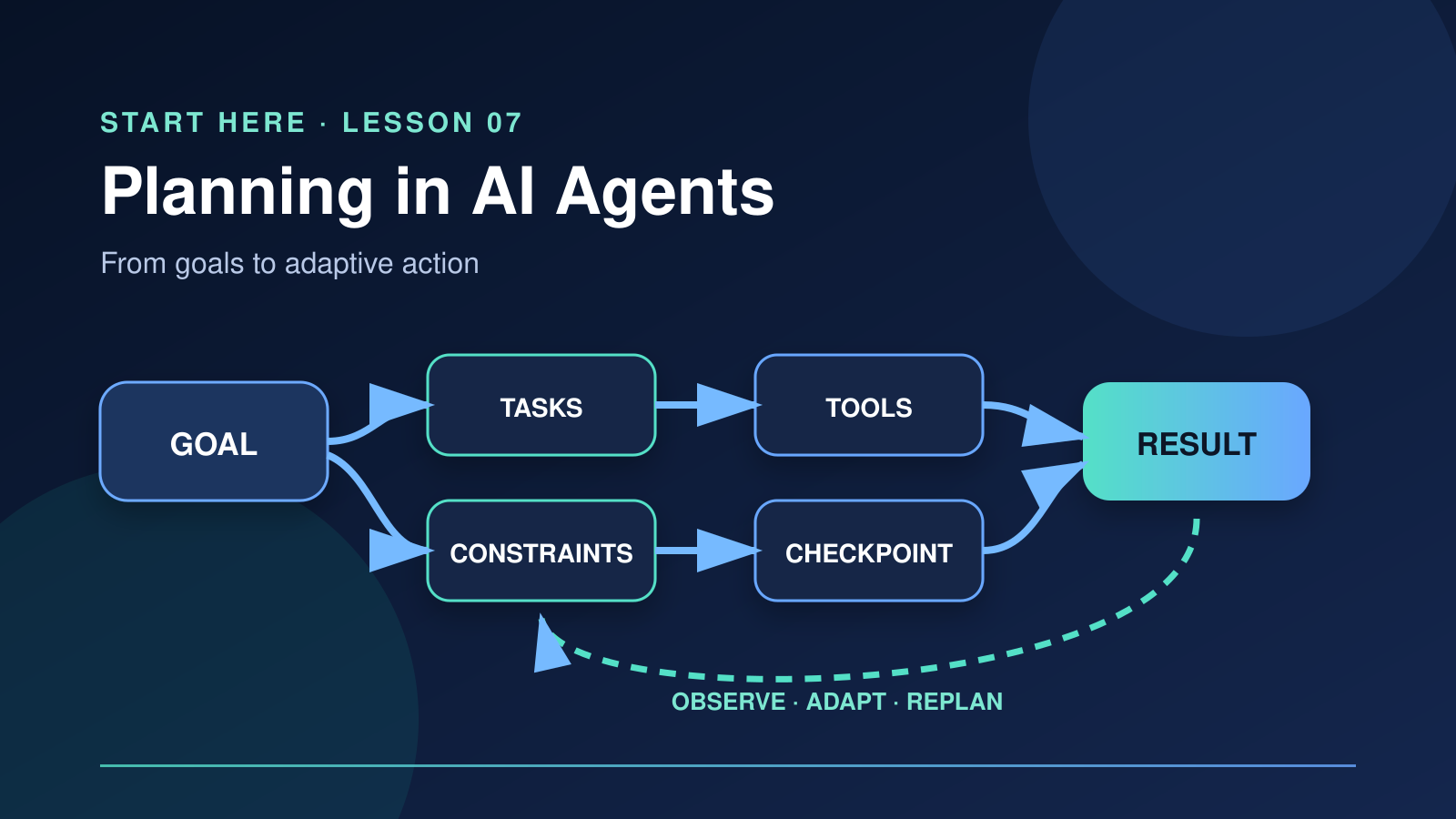
Planning in AI Agents: From Goals to Adaptive Action
Learn how AI agents turn goals into ordered tasks, account for dependencies and constraints, use tools, track progress, and replan when reality changes.
-
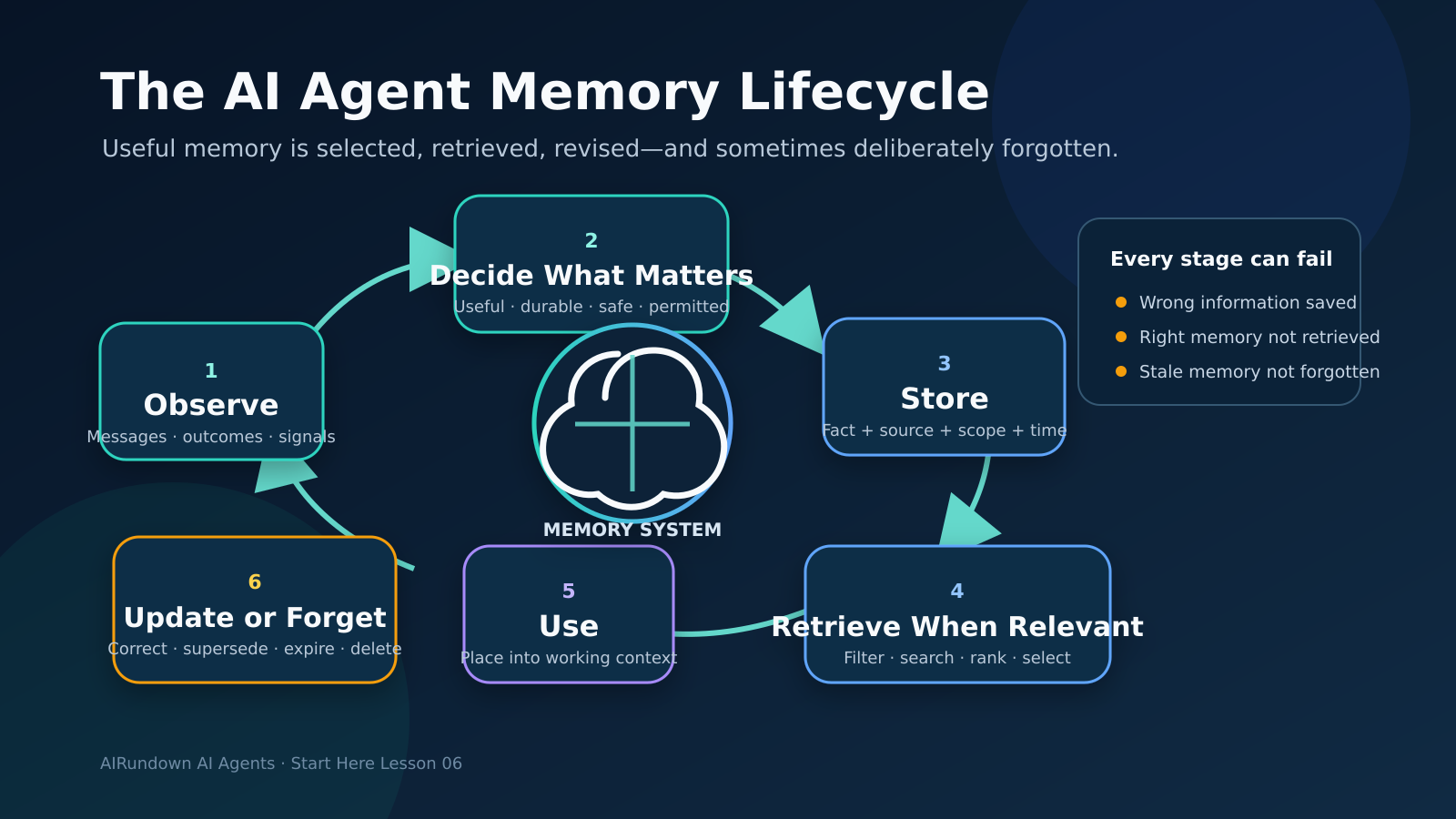
Memory in AI Agents: How Agents Remember, Retrieve, and Forget
Learn how AI agent memory works, from context windows and working memory to persistent stores, retrieval, updating, forgetting, and memory quality.
-
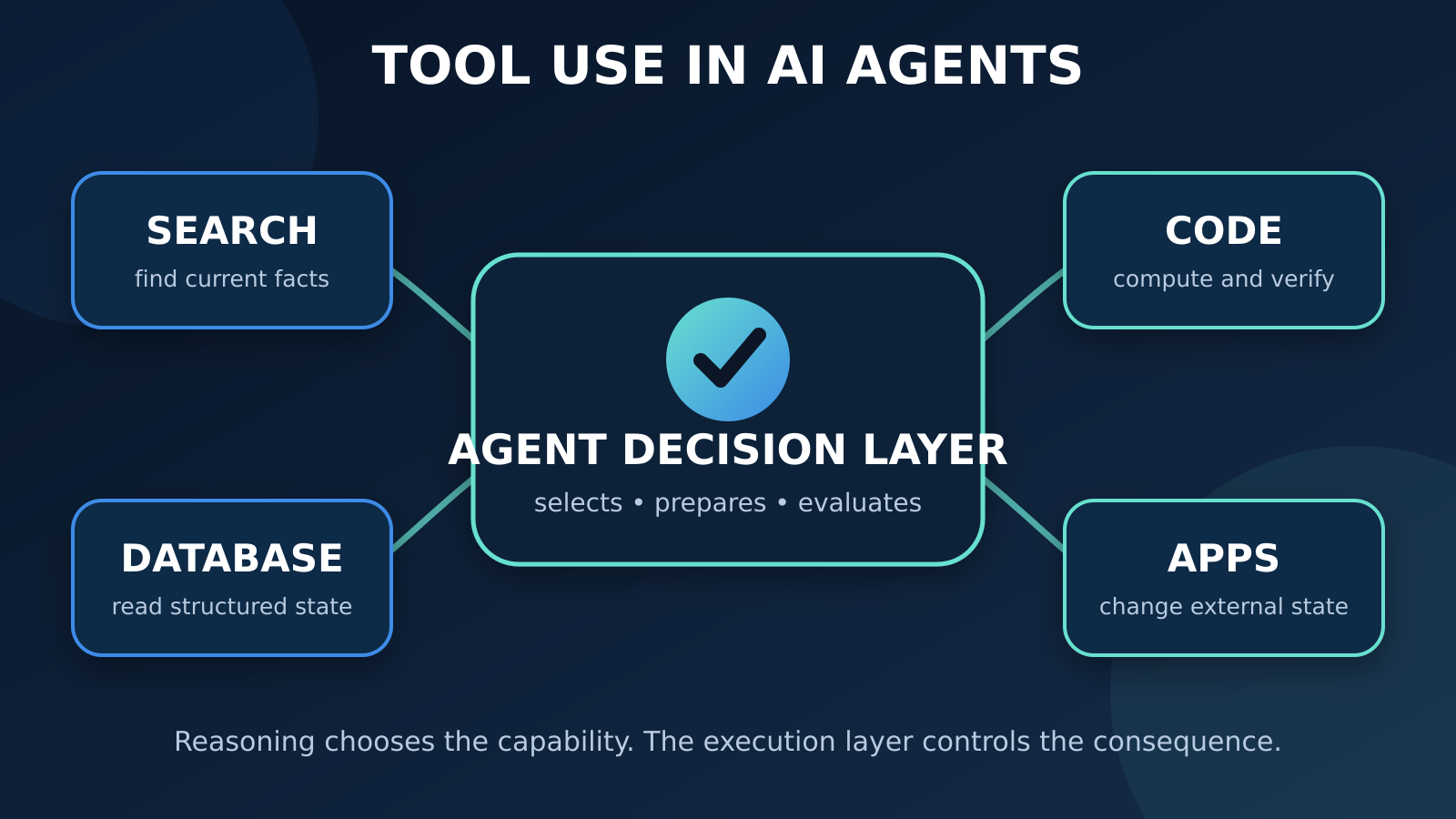
Tool Use in AI Agents: How Agents Act Beyond the Model
Learn how AI agents select tools, prepare arguments, execute functions and APIs, observe results, recover from errors, and stay within safe permission boundaries.
-
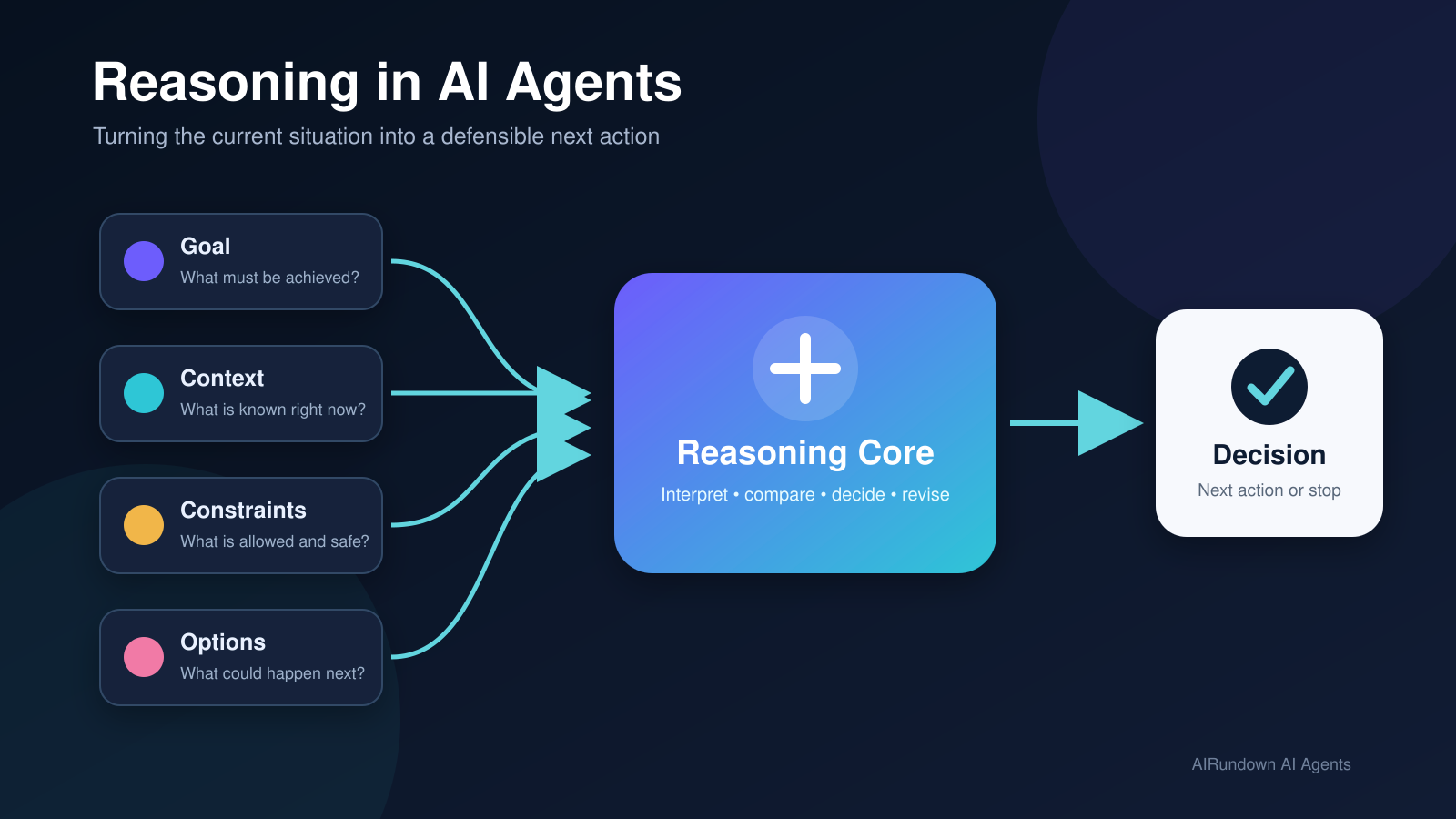
Reasoning in AI Agents: How Agents Decide What to Do Next
Learn how AI agents interpret goals, break down tasks, handle uncertainty, choose tools, reflect on results, and decide what to do next.
-
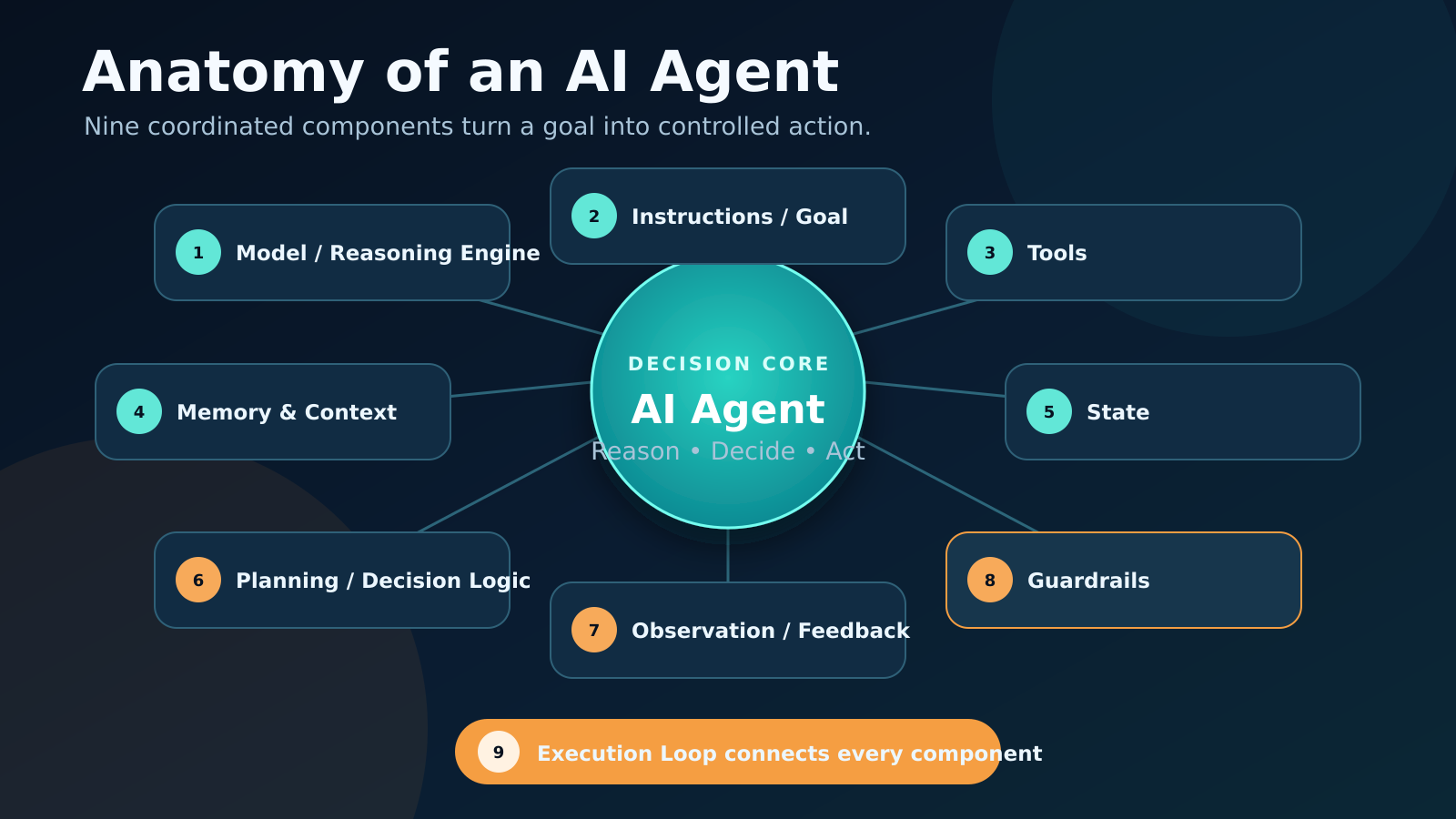
Anatomy of an AI Agent: The 9 Core Components
A beginner-friendly breakdown of the model, instructions, tools, memory, state, planning, feedback, guardrails, and execution loop inside an AI agent.